
Appetizers
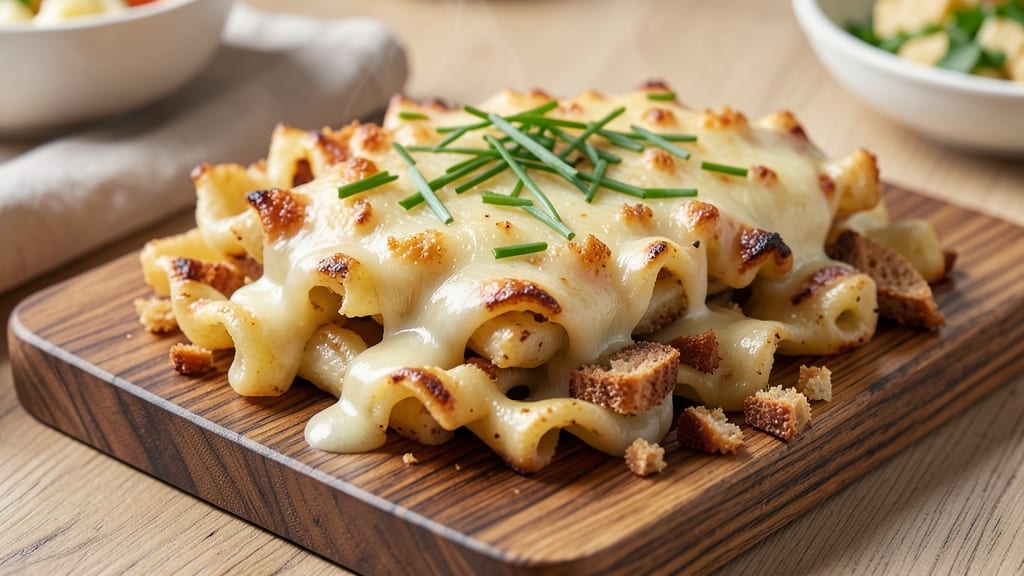
This baked cheese spaetzle recipe delivers the perfect balance of crispy edges and molten, stretchy cheese rivers that pull apart with every bite. 🌟 The secret lies in the traditional German technique of grating fresh spaetzle dough and baking it until golden, then melting a blend of Gruyère and Emmental into gooey perfection.
I've refined this recipe over years of testing, ensuring the cheese stays stretchy rather than rubbery—a common pitfall in home cooking.
The process starts with a simple egg-based dough that's grated and baked to create delicate, crispy strands. What sets this apart is the cheese selection: Gruyère provides nutty depth while Emmental adds just enough tang to complement the spaetzle's mild flavor.
The baking technique is crucial—high heat initially for crispiness, then a lower temperature to melt the cheese without burning it.
By the time it emerges from the oven, you'll have a dish that's equal parts comforting and impressive—crispy at the edges, tender in the center, with rivers of melted cheese that stretch dramatically.
The aroma alone will have everyone gathering around the table, and each bite delivers that satisfying contrast of textures and flavors.
Serve with caramelized onions for sweetness, a simple arugula salad for freshness, or keep it classic with a side of buttery pickles. This recipe transforms a humble spaetzle into a showstopping appetizer that feels both traditional and modern. Let's get started on creating this German favorite at home.
Ingredients for baked cheese spaetzle
These 11 ingredients transform simple spaetzle dough into crispy, cheesy perfection with stretchy rivers.
| Ingredient | Amount | Notes |
|---|---|---|
| All-Purpose Flour 🌾 | 2 cups | Sifted for light texture |
| Large Eggs 🥚 | 4 whole | Room temperature preferred |
| Water 💧 | 1 ½ cups | Room temperature |
| Salt 🧂 | 1 ½ tsp | Kosher or sea salt |
| Gruyère Cheese 🧀 | 1 ½ cups | Freshly grated, shredded |
| Emmental Cheese 🧀 | 1 ½ cups | Freshly grated, shredded |
| Unsalted Butter 🧈 | 4 tbsp | Melted for cheese blend |
| Garlic Cloves 🧄 | 3 cloves | Minced for flavor depth |
| Fresh Parsley 🌿 | ¼ cup | Chopped, for garnish |
| Nutmeg 🌶️ | ¼ tsp | Freshly grated |
| Black Pepper 🌶️ | ¼ tsp | Freshly ground |
The cheese selection is non-negotiable here. Gruyère and Emmental from specialty cheese counters—like Whole Foods or Gourmet Getaway—deliver the right balance of nutty depth and tang. Pre-shredded cheese won't work; grate it yourself for maximum melt. For the dough, King Arthur flour gives the best texture, but any high-protein all-purpose works. Room-temperature eggs blend smoothly without lumps, so take them out 30 minutes before mixing. The nutmeg should be freshly grated—pre-ground loses its punch quickly.
No Gruyère? Parmesan at half the amount works in a pinch, but you'll lose some of that signature stretch. Emmental unavailable? Swiss cheese is the closest substitute. For the parsley, dried oregano at one-third the amount adds color if you're fresh out. The garlic can be minced with a knife or pulsed quickly in a food processor—just don't overdo it. If you're making this ahead, prep the dough and cheese mixture separately, then combine right before baking to maintain texture. The dough keeps for 2 days in the fridge, wrapped tightly in plastic.
The grated dough should be baked immediately for crispy edges—don't let it sit. Once baked, transfer to a 350°F oven with the cheese to melt gently. Store leftovers in an airtight container for 3 days—they reheat beautifully with a quick broil. For extra crispiness, broil for 2-3 minutes before serving. The cheese blend keeps well for 1 week in the fridge, perfect for future spaetzle batches. Double the dough if you're feeding a crowd—it's worth the extra effort.
Why You'll Love This Recipe
- No Fuss, One Bowl: Between us, this recipe is that easy—I just mix flour, eggs, water, and salt in one bowl, then press it through a spaetzle maker (or a colander with holes) right into the pan. No rolling, no shaping, no stress—just dump, bake, and enjoy.
- Gruyère Magic: That nutty, melty Gruyère turns this into something special. It’s not just any cheese—it browns beautifully on top while staying gooey inside, like a hug from Switzerland. (And honestly, the first bite makes you forget you’re eating pasta.)
- Weeknight or Weekend: Make it for a lazy Tuesday dinner or bring it to a potluck—it’s always a hit. The baked version holds up well, so you can prep ahead and reheat without drying it out. My kids even ask for it when I’m “too tired to cook.”
- Budget-Friendly Leftovers: Flour, eggs, and cheese? Check. Affordable. The portions stretch easily, and leftovers reheat like a dream—crispy edges, melty center, no weird textures. I’ll be real: I’ve eaten this for breakfast the next morning, and no one judges.
Step-by-step instructions for baked cheese spaetzle
Master these techniques and you'll achieve spaetzle with perfect crispy edges and gooey, stretchy cheese.
👨🍳 Step 1: Make the Spaetzle Dough
In a large mixing bowl, combine the 2 cups all-purpose flour and 1.5 tsp salt. Whisk to remove any lumps—this ensures a smooth texture. Create a well in the center and add the 4 whole large eggs and 1.5 cups water at room temperature. Mix vigorously until you have a thick, shaggy dough that pulls away from the bowl.
Here's the thing—this dough should be stiff but workable. If it feels too dry, add 1 teaspoon water at a time until it comes together. If it's too sticky, sprinkle in 1 tablespoon flour. The dough needs to be thick enough to hold its shape when scraped, but not so stiff it cracks when baking. Cover the bowl with a damp towel and let it rest for 10 minutes—this relaxes the gluten and makes it easier to work with.
🍳 Step 2: Prepare the Cheese Sauce
In a medium saucepan, melt the 4 tbsp unsalted butter over medium heat. Add the 3 minced garlic cloves and cook for 30 seconds until fragrant—don't let it brown or it'll turn bitter. Reduce heat to low and gradually whisk in the 1.5 cups Gruyère cheese and 1.5 cups Emmental cheese until fully melted and smooth.
Real talk: if the cheese clumps, don't force it. Instead, remove the pan from heat and use a rubber spatula to gently coax the cheese into submission. Once smooth, stir in the 0.25 tsp nutmeg and 0.25 tsp black pepper. The sauce should be thick and glossy, ready to coat the spaetzle in that perfect melty blanket. Keep it warm on the stove while you cook the spaetzle.
🔥 Step 3: Cook the Spaetzle
Bring a large pot of water to a rolling boil and salt it generously (it should taste like seawater). Using a spaetzle maker or a box grater with large holes, press the dough through into the boiling water. The dough will immediately form small, irregular noodles—this is what gives spaetzle its rustic charm.
Cook the spaetzle for 2-3 minutes until they float to the surface and are light golden around the edges. They should be tender but still slightly firm to the bite. Use a slotted spoon to transfer them to a colander, shaking gently to remove excess water. Work in batches—don't overcrowd the pot or the water temperature will drop and the spaetzle will turn mushy.
🥘 Step 4: Assemble and Bake
Preheat your oven to 375°F. Generously grease a 9x13-inch baking dish with butter—this prevents sticking and adds extra flavor. Spread half of the cooked spaetzle in an even layer in the dish, then pour half of the cheese sauce over them. Toss gently to coat, then sprinkle with half of the 0.25 cup chopped fresh parsley. Repeat with the remaining spaetzle and sauce.
Bake uncovered for 15-20 minutes until the top is deep golden brown and the cheese is bubbling vigorously. The edges should be crispy while the center remains tender. If the top browns too quickly, tent loosely with foil for the last 5 minutes to prevent over-browning. The cheese should pull into stretchy strands when you lift a piece—this is your signal of success.
🍽️ Step 5: Rest and Serve
Remove the baking dish from the oven and let it rest for 5 minutes before serving. This resting period allows the cheese to set slightly and makes it easier to slice. The spaetzle should be crispy on the edges with a gooey, stretchy cheese center that pulls apart dramatically when you cut into it.
Garnish with additional chopped parsley and serve immediately while the cheese is still molten. The contrast between the crispy edges and melty center is what makes this dish so special. For extra flavor, serve with a simple arugula salad or roasted vegetables on the side.
Pro Tips For Making Baked Cheese Spaetzle
- Use a Spaetzle Press—Or Its Hacky Stand-In: I learned this the hard way—trying to shred spaetzle by hand is a mess. If you don’t have a press, grate the dough through a box grater (the large-holed kind) into boiling water. It’s not perfect, but it works, and your hands stay clean.
- Shred Cheese Like a Pro: Gruyère clumps when melted—skip the food processor. Pulse it in short bursts, then finish by hand with your fingers to break up any remaining lumps. This ensures a smooth, melt-in-your-mouth texture instead of gritty surprises.
- Boil Water to a Rolling Simmer: High heat is non-negotiable. If the water is just bubbling gently, the spaetzle will turn into sad, gluey dumplings. Crank the heat until it’s a steady, rolling boil before adding the dough—this gives you those perfect, light strands.
- Bake Until the Top Custards: The cheese pulls away from the edges when it’s done—don’t peek too early. Cover with foil for the first 20 minutes, then uncover and bake until the top is golden and slightly puffed. If it’s still pale, give it another 5 minutes. Trust the process.
Regional styles of this recipe
Swiss Alpine Twist
In the Swiss Alps, spaetzle is traditionally baked with a mix of Gruyère and Appenzeller cheeses, adding a sharp, nutty depth that pairs perfectly with local Rösti potatoes.
I've adapted this by incorporating ½ tsp caraway seeds into the cheese sauce—just toast them lightly in butter first to release their aromatic oils. Serve with a side of pickled red cabbage and a crisp Dry Riesling to complete the alpine experience. 🏔️
Bavarian Crispy Top
Bavarian chefs take their spaetzle to the next level by adding a crispy breadcrumb topping> before baking. Toss ½ cup fine breadcrumbs> with 2 tbsp melted butter, 1 tbsp parsley,> and ¼ tsp smoked paprika> before sprinkling over the cheese.
Bake as directed, then broil for 2-3 minutes> at the end for extra crunch. Pair with sauerkraut> and frankfurter sausages> for a hearty German feast. 🥖
Austrian Herb Version
Austrian kitchens often infuse spaetzle with fresh herbs like chives and dill>. After baking, stir 2 tbsp chopped chives> and 1 tbsp chopped dill> into the cheese sauce before assembling.
For extra richness, add 2 oz cream cheese> to the cheese blend. Serve with a side of cucumber-dill salad> and a cold Pilsner beer> to balance the richness. 🌿
Italian-Inspired Cheese Blend
For an Italian twist, swap the Gruyère for Parmigiano-Reggiano> and Emmental for Fontina>. Add ¼ tsp dried thyme> and ½ tsp lemon zest> to the cheese sauce for a bright, herby flavor.
Top with sun-dried tomatoes> and basil leaves> before serving. This version pairs beautifully with a Chianti Classico> and a simple arugula salad> with lemon vinaigrette. 🍷
French-Style Au Gratin
In France, spaetzle is often baked with a béchamel sauce> instead of melted cheese. Mix 1 cup heavy cream>, 2 tbsp butter>, and 2 tbsp flour> to make a roux, then whisk in 1 cup grated Gruyère> until smooth.
Pour over cooked spaetzle and bake until golden. Finish with toasted breadcrumbs> and a sprinkle of nutmeg>. Serve with a Bordeaux red wine> for a sophisticated touch. 🍷
Modern Fusion with Crispy Prosciutto
For a modern take, top the baked spaetzle with thin slices of prosciutto> and shaved Parmesan> before baking. The prosciutto crisps beautifully, adding a salty crunch that contrasts with the creamy cheese.
Garnish with roasted cherry tomatoes> and balsamic glaze**> for a sweet-tangy finish. This version works as a showstopping appetizer or light main course. 🍅
Nutrition facts
Frequently asked questions
Can I make spaetzle dough ahead of time?
Yes! The dough keeps well for 2 days in the fridge, wrapped tightly in plastic. For best results, bring it to room temperature before grating and baking. If storing longer, freeze the dough in portions for up to 1 month—thaw overnight in the fridge before using.
What if my cheese sauce gets grainy?
Grainy cheese happens when it overheats. Remove the pan from heat and use a rubber spatula to gently fold the sauce until smooth. For extra insurance, melt the cheese over low heat and stir constantly. If it's still clumpy, strain it through a fine-mesh sieve before using.
Can I use pre-shredded cheese?
Pre-shredded cheese has anti-caking agents that prevent proper melting. Always grate your own cheese for the best stretchy texture. If you're in a pinch, use freshly grated Parmesan at half the amount, but expect less melt.
How do I fix rubbery cheese?
Rubbery cheese usually means the spaetzle was overcooked or the cheese wasn't fresh. To salvage it, broil for 1-2 minutes to melt the cheese again, then cover with foil to trap moisture. For future batches, bake at 375°F and remove when the edges are golden but the center is still tender.
What's the best way to reheat leftovers?
Reheat in a 350°F oven for 10-15 minutes covered with foil to maintain moisture. For extra crispiness, broil for 2-3 minutes at the end. Microwaving works in a pinch, but it can make the cheese rubbery—always cover with a damp paper towel to prevent drying.