
Sauces & Condiments
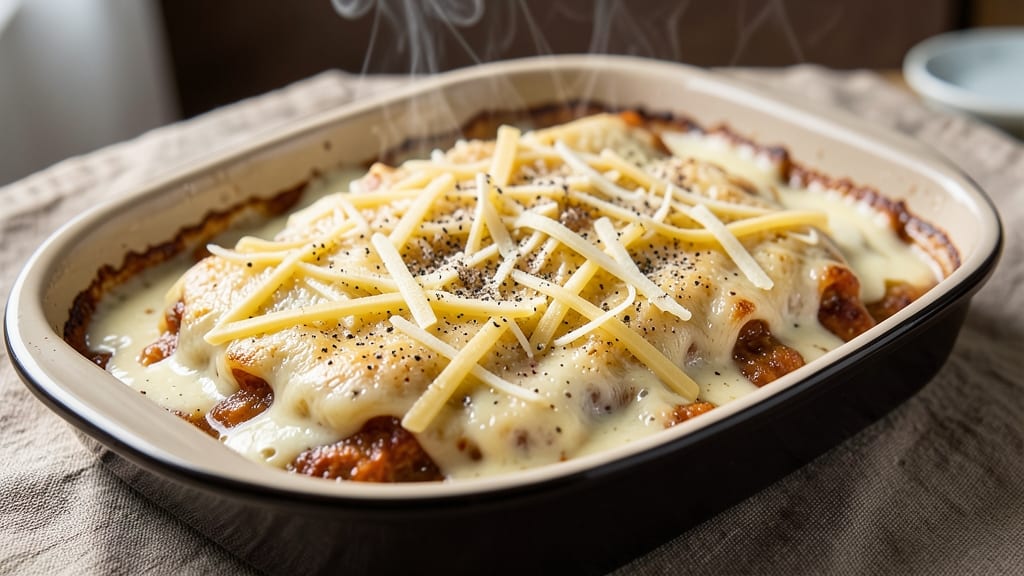
This au gratin cheese sauce recipe transforms ordinary dishes into restaurant-worthy masterpieces with its perfect balance of silky fondue and crispy breadcrumb crust. The secret lies in a slow, careful reduction that creates a velvety texture while maintaining rich, cheesy depth—no lumps, no separation, just pure, luxurious sauce that clings to every bite.
What sets this recipe apart is the technique: a roux-based foundation that forms the backbone of the sauce, combined with sharp cheddar and Gruyère for complexity. The breadcrumb topping isn’t just decoration—it adds a satisfying crunch that contrasts beautifully with the creamy interior.
This isn’t your grandmother’s casserole sauce; it’s a versatile condiment that elevates baked potatoes, grilled fish, or even steak to new heights.
The result is a sauce that’s foolproof yet refined, with a smooth, melt-in-your-mouth consistency and a golden, crispy top. The flavor develops as it bakes, deepening into something richer and more aromatic with each passing minute.
Whether you’re preparing a classic au gratin dish or using it as a finishing touch, this sauce delivers professional-quality results at home.
Best of all, it reheats beautifully and keeps well in the fridge for up to 5 days, making it perfect for meal prep. Ready to master this technique? The ingredients are simple, but the outcome is anything but ordinary.
Ingredients for au gratin cheese sauce
These twelve ingredients create restaurant-quality au gratin sauce with velvety fondue and crispy breadcrumb perfection.
| Ingredient | Amount | Notes |
|---|---|---|
| Unsalted Butter 🧈 | ½ cup | Cold, cubed for roux |
| All-Purpose Flour 🌾 | ½ cup | Diamond Crystal preferred |
| Sharp White Cheddar Cheese 🧀 | 1 ½ cups | Shredded, aged 6+ months |
| Gruyère Cheese 🧀 | 1 cup | Freshly grated, nutty flavor |
| Whole Milk 🥛 | 1 cup | Full-fat for creaminess |
| Heavy Cream 🥛 | ½ cup | 36% fat minimum |
| Fresh Breadcrumbs 🍞 | ½ cup | Panko-style preferred |
| Garlic Cloves 🧄 | 3 cloves | Minced, fresh preferred |
| Dried Thyme 🌿 | 1 tsp | Or 1 tbsp fresh |
| Diamond Crystal Kosher Salt 🧂 | 1 tsp | Adjust to taste |
| Ground Black Pepper 🌶️ | ½ tsp | Freshly cracked |
| Nutritional Yeast 🍄 | 1 tbsp | For umami depth |
The cheese selection makes all the difference. Sharp white cheddar brings tangy brightness while Gruyère adds nutty complexity—don't substitute pre-shredded (it contains anti-caking agents that prevent melting). For Gruyère, Whole Foods or specialty cheese shops carry the best quality. The butter should be cold when making the roux—this creates proper flavor development. Fresh breadcrumbs (like Trader Joe's panko) toast beautifully, while store-bought often contains preservatives that prevent crisping. Nutritional yeast might sound odd, but it adds that signature umami kick professional chefs use.
No Gruyère? Comté or Emmental work in a pinch, but expect slightly different flavor profiles. Pre-shredded cheese? Grate your own—it melts so much better. Running short on breadcrumbs? Toasted almond flour creates a similar texture. The roux is non-negotiable—this is what gives the sauce its velvety texture. If you burn it, start over. For extra richness, add 1 tbsp cream cheese to the finished sauce. The thyme can be swapped for dried marjoram at half the amount, but fresh thyme has superior aroma. Always taste as you go—adjust salt and pepper to your preference.
This sauce peaks after baking, so reheat gently—microwaving destroys the crispy topping. Store in an airtight container for 5 days in the fridge, or freeze for 3 months (portion into ice cube trays for single servings). For extra crunch before serving, sprinkle with toasted breadcrumbs and a pinch of paprika. The sauce thickens as it cools, so thin with warm milk if needed. Make a double batch—the leftovers are perfect on baked potatoes or grilled fish.
Why You'll Love This Recipe
- Five-Ingredient Magic: The pantry staples I already own—just butter, flour, milk, and two cheeses—make this feel like cheating. No odd spices or hard-to-find items; just the kind of simplicity that disappears once the golden crust forms.
- Creamy Crisp Contrast: That sharp white cheddar and nutty Gruyère combo? It’s the only way to eat au gratin—creamy in the middle, with a crust so crisp it sings. Honestly, the first time I tasted it, I nearly burned my mouth rushing for another bite.
- Leftovers That Beg: This sauce keeps for days in the fridge, reheats like a dream, and still tastes fresh enough to drizzle over toast or pasta. Between us, I’ve eaten it cold straight from the jar—no judgment here.
- Weeknight Workhorse: Whether it’s mac and cheese, roasted veggies, or even grilled chicken, this sauce turns ordinary meals into something special. I’ll be real: it’s my go-to for when I need flavor without the fuss.
Step-by-step instructions for breadcrumbs-crusted au gratin cheese sauce
This sauce delivers that perfect balance of crispy breadcrumb crust and velvety fondue—here's how to nail it every time.
Create the Perfect Roux Foundation
In a medium saucepan, melt the 0.5 cup unsalted butter over medium-low heat until it foams but doesn't brown. Add the 0.5 cup all-purpose flour all at once and whisk vigorously for 2-3 minutes until the mixture turns a rich, nutty golden brown—this is your roux. The color change signals the flour's raw taste has cooked off completely, setting the stage for maximum flavor development.
Watch the pan carefully—if it darkens too quickly, reduce the heat immediately. A properly cooked roux should smell toasty and nutty, not burnt. This foundational step ensures your sauce will have that silky, velvety texture instead of a floury aftertaste. Once golden, immediately pour in the 1 cup whole milk and 0.5 cup heavy cream while whisking constantly to prevent lumps.
Build Layers of Flavor and Texture
Return the sauce to medium heat and bring to a gentle simmer, whisking frequently to prevent scorching. Gradually add the 1.5 cups sharp white cheddar cheese and 1 cup gruyère cheese, stirring until completely melted and smooth. The sauce should thicken noticeably—this is where the magic happens as the cheeses emulsify with the roux.
Here's the thing—don't rush this step. Let the cheese melt completely before adding anything else. Stir in the 1 tbsp nutritional yeast, 1 tsp dried thyme, 1 tsp diamond crystal kosher salt, and 0.5 tsp ground black pepper. The nutritional yeast adds that deep, umami richness that takes this sauce from good to extraordinary. Remove from heat and let it rest for 5 minutes—this allows the flavors to meld perfectly.
Prepare the Crispy Breadcrumb Topping
While your cheese sauce rests, prepare the topping by mixing the 0.5 cup fresh breadcrumbs with the 3 cloves minced garlic in a small bowl. The breadcrumbs should be panko-style for maximum crispiness. Spread this mixture evenly on a small baking sheet and toast in a 375°F oven for 5-6 minutes until golden brown and fragrant. Watch closely—breadcrumbs burn faster than you think!
This crispy topping is what transforms your sauce from ordinary to restaurant-quality. The garlic infuses the breadcrumbs with flavor while the toasting process creates that satisfying crunch contrast. Keep the toasted breadcrumbs warm while you finish the sauce.
Assemble and Bake to Golden Perfection
Preheat your broiler to high. Pour the cheese sauce into a 6-inch oven-safe skillet or baking dish, spreading it evenly. Sprinkle the toasted breadcrumb mixture evenly over the top, pressing down gently with the back of a spoon to ensure good contact. The breadcrumbs should form a continuous layer with no gaps.
Place the skillet under the broiler for 3-5 minutes until the breadcrumbs turn a deep golden brown and the cheese begins to bubble around the edges. Here's where it gets critical—watch it like a hawk! The moment the top turns golden, remove it immediately. Over-browning will make the breadcrumbs bitter. The cheese sauce should be bubbling gently underneath, creating that perfect fondue texture.
Rest and Serve Immediately
Remove from the oven and let rest for 2-3 minutes—this brief resting period allows the breadcrumb crust to set slightly while keeping the cheese sauce molten underneath. Serve immediately while the breadcrumbs are still crispy and the cheese maintains its silky fondue consistency.
This sauce is best enjoyed straight from the oven when the contrast between the crispy breadcrumbs and the velvety cheese is at its peak. The sharp white cheddar provides that classic tangy flavor, while the gruyère adds nutty depth. Each bite should deliver that perfect combination of textures and flavors that makes au gratin so irresistible.
Pro Tips For Making Au Gratin Cheese Sauce
- Melt Cheese Slowly: Toss the shredded cheeses into the warm roux (butter-flour mixture) in batches—no more than ½ cup at a time. If you dump them all in, you’ll end up with clumpy, unmelty lumps instead of a silky sauce. Stir like you’re trying to win a prize for patience.
- Use Cold Milk: Chill the whole milk before adding it to the roux. Cold milk tempers the heat and prevents the sauce from curdling or seizing up. I learned this the hard way after making a lumpy disaster with room-temperature milk—now I pop the carton in the fridge for 10 minutes.
- Shred Cheese Fresh: Skip the pre-shredded cheese—it’s coated with anti-caking agents that make the sauce grainy. Use a box grater or food processor, and shred the cheddar and Gruyère right before mixing. The extra effort guarantees a velvety texture instead of a gritty one.
- Whisk Like Your Life Depends on It: Once the milk hits the roux, keep whisking vigorously for at least 2–3 minutes until the sauce thickens. If you let it sit, you’ll get those dreaded lumps that no amount of stirring later can fix. This isn’t the time to multitask—focus on that pot.
Essential equipment for au gratin cheese sauce
Roux Mastery Kit
The foundation of any great au gratin sauce starts with a perfect roux. You’ll need a 10-inch heavy-bottomed saucepan—I recommend All-Clad Stainless or Le Creuset for even heat distribution. A whisk with a long handle (like OXO Good Grips) helps prevent lumps while cooking.
For precise temperature control, a thermometer (I use Thermoworks Thermapen) ensures you don’t burn the roux—aim for 160-170°F during the cooking process.
Cheese Melting Tools
Cheese is the star of this sauce, so proper melting is critical. A fine-mesh strainer (like Microplane) helps shred cheese smoothly, while a heatproof spatula (I prefer OXO Good Grips) prevents scorching.
For even melting, a double boiler (or a heatproof bowl over simmering water) keeps temperatures consistent. A small ladle helps transfer the melted cheese mixture without spills.
Baking Essentials
Achieving that perfect crispy topping requires the right baking tools. A 6-inch oven-safe skillet (I use Visions stainless steel) distributes heat evenly for broiling. For even toasting, a small baking sheet (like Le Creuset) works best.
A kitchen torch (such as Blowtorch Pro) can add extra crispiness if your broiler isn’t strong enough. Don’t forget a spatula to press down the breadcrumbs for even coverage.
Temperature Control
Precision is key when broiling. A thermometer probe (like Meater Plus) monitors the breadcrumb temperature—ideal crispiness occurs at 350-375°F. For even browning, a wire rack placed on a baking sheet prevents direct contact with heat.
If your oven runs hot, reduce the broiler setting to medium and watch closely. A timer (set for 3-5 minutes) ensures you don’t overcook the topping.
Storage Solutions
Keep your sauce fresh with the right containers. Glass Pyrex dishes maintain crispiness when reheating, while airtight containers (like Rubbermaid Brilliance) preserve flavor in the fridge for 5 days.
For freezing, quart-sized freezer bags (with 1 inch headspace) prevent freezer burn. A fine-mesh sieve helps strain excess moisture before reheating for a smoother texture.
Nutrition facts
Frequently asked questions
Can I make this au gratin cheese sauce without a broiler?
For a stovetop finish, spread the toasted breadcrumbs on top and cover the skillet with a lid. Place it on the stovetop over medium-low heat for 2-3 minutes until the breadcrumbs turn golden and the cheese bubbles. Keep an eye on it—this method requires more attention to avoid over-browning. A kitchen torch also works well for localized crisping.
What's the best cheese substitute if I can't find Gruyère?
For Gruyère, try Comté or Emmental for nutty depth, or Parmesan for umami richness. If you prefer sharper flavor, add 0.5 cup extra sharp cheddar and reduce the Gruyère to 0.5 cup. Avoid pre-shredded cheese—it contains anti-caking agents that prevent proper melting. Always grate your own for the best texture and flavor.
How do I fix a sauce that's too thick or too thin?
For a thicker sauce, simmer uncovered for 2-3 minutes to evaporate excess moisture. If it's still too runny, mix 1 tbsp cornstarch with 2 tbsp cold water, stir into the sauce, and cook for 1 more minute. For a thinner sauce, whisk in 1-2 tbsp warm milk gradually until you reach the desired consistency. Remember, the sauce will thicken further as it cools.
Can I make this sauce ahead of time?
Yes! Prepare the sauce up to 24 hours ahead and store it in an airtight container in the fridge. When ready to serve, reheat in a saucepan over low heat until warmed through, stirring frequently. For the crispy topping, toast fresh breadcrumbs separately and sprinkle them on just before serving. The sauce reheats beautifully, though the breadcrumbs will lose some crispness.
Why did my breadcrumb topping turn soggy?
Soggy breadcrumbs usually happen from steam or insufficient heat. Ensure your oven is fully preheated to 375°F and broil on high. Press the breadcrumbs down firmly with the back of a spoon before baking to maximize contact with the sauce. For extra crispiness, broil for just 2-3 minutes—any longer risks burning. If reheating leftovers, broil for 1-2 minutes to restore crispness.