
Appetizers
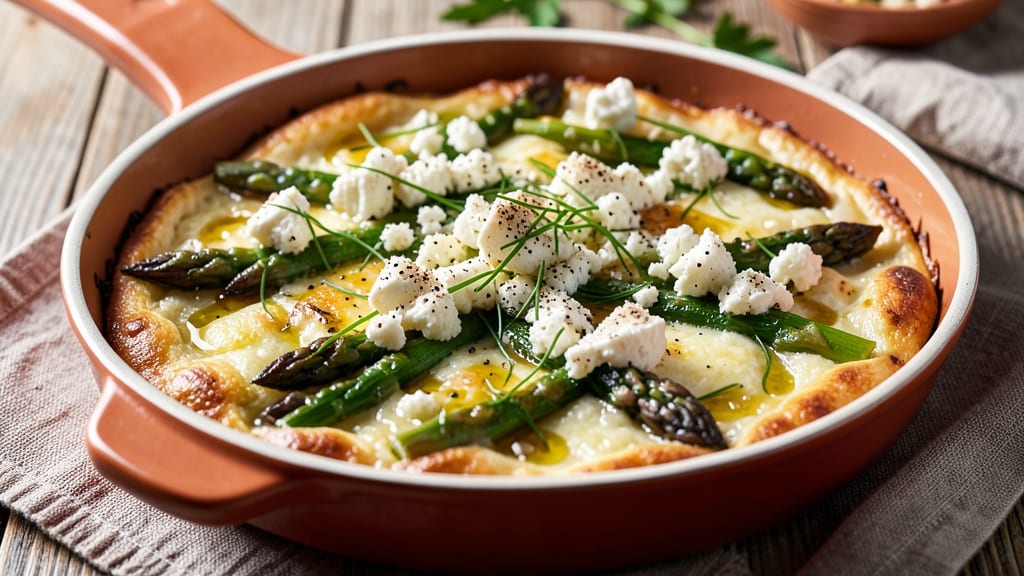
This asparagus and goat cheese frittata delivers crispy edges that shatter with every bite and silky eggs that melt on your tongue. The secret lies in blanching the asparagus first—this preserves its vibrant green color and tender-crisp texture while keeping the goat cheese creamy and rich.
I perfected this recipe after years of testing, and it’s become my go-to for brunch or a light dinner that feels indulgent without being heavy.
The beauty of this frittata is its simplicity: just whisked eggs, fresh asparagus, and crumbled goat cheese come together in one pan, yet the result is restaurant-quality. A sprinkle of fresh herbs at the end adds brightness, while the crispy edges ensure every bite has that satisfying crunch.
It’s a vegetarian dish that satisfies even meat lovers, thanks to the rich, savory depth of the goat cheese and the bright, fresh asparagus.
What makes this frittata truly special is the contrast of textures—tender asparagus spears, creamy goat cheese, and the crispy golden crust that forms around the edges.
It’s the kind of dish that feels elegant but comes together in under 30 minutes, making it perfect for weekend brunches or a quick weeknight meal. The best part? It reheats beautifully, so you can enjoy leftovers just as good as the first serving.
Serve it with a simple arugula salad or crusty bread to soak up every last bit of that creamy, herby goodness. Here’s how to make it—simple, foolproof, and impossible to resist.
Ingredients for asparagus and goat cheese frittata
Just 11 ingredients transform into a brunch star with crispy edges and creamy goat cheese.
| Ingredient | Amount | Notes |
|---|---|---|
| Large Eggs 🥚 | 8 whole | Room temperature for even cooking |
| Heavy Cream 🥛 | ¼ cup | Full-fat for richness |
| Fresh Asparagus 🌱 | 1 lb | Medium spears, trimmed ends |
| Goat Cheese 🧀 | 6 oz | Soft, crumbled variety |
| Extra-Virgin Olive Oil 🫒 | ½ cup | High-quality, fruity |
| Fresh Chives 🌿 | ¼ cup | Finely chopped for garnish |
| Fresh Dill 🍃 | 0.1 cup | Chopped, stems removed |
| Kosher Salt 🧂 | 1 ½ tsp | Diamond Crystal preferred |
| Freshly Ground Black Pepper 🌶️ | ½ tsp | Cracked peppercorns preferred |
| All-Purpose Flour 🌾 | 1 tbsp | For crispy edges technique |
| Lemon Zest 🍋 | 1 tsp | Brightens the flavor |
The asparagus makes or breaks this frittata. Fresh, in-season spears are non-negotiable—look for vibrant green, not woody stems. Trim the ends carefully (about 1 inch) and blanch them first for that perfect tender-crisp texture. Whole Foods or local farmers markets usually have the best selection. For goat cheese, La Tourangelle or Capri brands are my go-tos—they crumble beautifully and have that perfect tang. If you can't find goat cheese, creamy feta works in a pinch, but it won't be quite the same. The eggs should be large and fresh—crack them into a bowl first to check for any surprises.
No heavy cream? Full-fat Greek yogurt or sour cream works in a bind, though it'll be slightly tangier. Fresh herbs can be swapped—parsley or basil both work, but dill gives that perfect bright contrast to the goat cheese. The flour might seem odd, but it's what creates those crispy edges—trust me on this. For salt, Diamond Crystal has a finer grain that dissolves better, but any kosher salt works. The lemon zest might seem like an afterthought, but it brightens everything—don't skip it. If you're making this ahead, blanch and trim the asparagus first and store it separately until ready to cook.
This frittata reheats beautifully—just 2 minutes in a skillet over medium heat. Store leftovers in the fridge for 3-4 days, covered tightly. For make-ahead brunches, assemble everything except the eggs, then refrigerate overnight and bake in the morning. The goat cheese keeps best in its original packaging for up to 2 weeks, while fresh herbs should be wrapped in damp paper towels and stored in a sealed container. Freeze the cooked frittata for up to 1 month—it reheats like a dream.
Why You'll Love This Recipe
- One-Pan Magic: The asparagus just needs a quick trim—no dicing, no fuss—and the eggs handle the rest. I swear by my nonstick skillet here; no extra bowls, no mess, just slide it in the oven and walk away.
- Creamy Crisp Contrast: That first bite? The golden top cracks open to reveal a custardy center, while the goat cheese melts into the eggs like a dream. Honestly, the asparagus stays tender but still holds its shape—no sad, mushy spears here.
- Brunch or Lunch: Serve it warm with crusty bread for a weekend brunch, or let it cool and pack slices for a no-fuss workday lunch. I’ve even used leftover pieces in salads—shaved goat cheese and asparagus make everything fancier.
- Budget Bright Spot: Fresh asparagus is seasonal but affordable in spring, and eggs? Always a steal. The heavy cream adds richness without breaking the bank, and a little goat cheese stretches further than you’d think when mixed into the eggs.
Step-by-step instructions for asparagus and goat cheese frittata
Here's how to make a golden, crispy-edged frittata with silky eggs and bright herb flavors.
Prep the Asparagus and Whisk the Egg Mixture
Start by snapping off the tough ends of the 1 lb fresh asparagus—just bend each spear until it breaks naturally. Trim any woody bottoms and cut the spears into 2-inch pieces. You'll want about 4 cups of trimmed asparagus pieces for this recipe.
In a large bowl, whisk together the 8 whole large eggs and 0.25 cup heavy cream until fully combined. Add the 1.5 tsp kosher salt, 0.5 tsp freshly ground black pepper, 1 tbsp all-purpose flour, and 1 tsp lemon zest. Whisk vigorously for 1 full minute until the mixture is smooth and frothy—this creates light, fluffy eggs with crispy edges later. I like to use a fork first to break up the yolks, then switch to a whisk for that extra air incorporation.
Cook the Asparagus and Create the Base
Heat 0.25 cup extra-virgin olive oil in a 10-inch oven-safe skillet over medium-high heat until shimmering. Add the asparagus pieces in a single layer and cook for 4-5 minutes, stirring occasionally, until tender but still vibrant green. You want them cooked through but not mushy—think "just tender when pierced with a fork." Transfer the asparagus to a plate and tent with foil to keep warm.
Reduce heat to medium and pour the egg mixture into the skillet. Let it sit undisturbed for 2-3 minutes—this allows the bottom to set slightly before you stir. You'll see the edges start to set while the center remains runny, which is exactly what we want for that perfect crispy crust.
Build the Frittata with Goat Cheese
Using a spatula, gently push the cooked edges toward the center, creating space around the perimeter. This creates room for the frittata to expand as it cooks. Sprinkle 3 oz of the goat cheese evenly over the uncooked portion in the center. Then, carefully scatter the asparagus pieces over the goat cheese, leaving a ½-inch border around the edges.
Here's the thing—don't press down on the asparagus. We want it to stay submerged in the egg mixture as it cooks, so it absorbs all that rich, creamy goodness. Sprinkle the remaining 3 oz goat cheese evenly over the top, then let the frittata cook undisturbed for another 5-6 minutes until the edges are set but the center still looks slightly wet.
Finish Under the Broiler for Crispy Edges
Transfer the skillet to a 400°F preheated broiler, keeping it about 4 inches from the heat source. Watch closely—this is where we get those gorgeous crispy edges. Broil for 3-5 minutes until the top is golden brown and the edges are crispy. You'll see the center puff up slightly, which is perfect. If any spots brown too quickly, move the skillet closer to or farther from the heat source as needed.
Remove from the broiler and let the frittata rest for 5 minutes before serving. This resting time allows the eggs to fully set and makes slicing much easier. The center should still be slightly custardy—this is where all the rich, creamy goodness lives.
Garnish and Serve Warm
While the frittata rests, finely chop the 0.25 cup fresh chives and 0.1 cup fresh dill. Sprinkle them evenly over the top just before serving. The herbs add a bright, fresh finish that cuts through the richness of the goat cheese and eggs. I like to make a quick sauce on the side by whisking together 1 tablespoon extra-virgin olive oil, 1 teaspoon lemon juice, and a pinch of salt—it's the perfect complement to the frittata's flavors.
Slice into 4 wedges and serve warm. Each bite should deliver crispy edges, silky eggs, tender asparagus, and creamy goat cheese with a bright herb finish. Leftovers keep well in the fridge for 3 days—just reheat in a skillet over low heat to maintain that crispy texture.
Pro Tips For Making Asparagus And Goat Cheese Frittata
- Cook Asparagus First: Blanch the asparagus for 2 minutes in salted boiling water—this softens it just enough to melt into the frittata without turning to mush. I learned this the hard way after ending up with a frittata that tasted like a sad, overcooked salad.
- Use Room-Temp Eggs: Whisk eggs straight from the fridge and you’re asking for a dense, rubbery frittata. Let them sit in warm water for 5 minutes first—the cream will blend smoother, and the texture stays light and custardy.
- Salt the Goat Cheese: Plain goat cheese is tangy but can taste bland in a frittata. Mix in a pinch of flaky salt (about ¼ teaspoon per 4 oz) before folding it in—it brightens the flavor and balances the richness of the cream.
- Finish Under the Broiler: The last 2 minutes under the broiler give you that golden crust without overcooking the center. Watch it like a hawk—goat cheese burns faster than you’d think, and you want caramelized edges, not charred bits.
Regional styles of this dish
French Provençal Twist
In Provence, they'd elevate this frittata with sun-dried tomatoes (about ¼ cup, chopped) and herbes de Provence (1 tsp) instead of dill. I like to add 1 tbsp white wine to the egg mixture for a subtle brightness.
The French version often includes goat cheese wrapped in prosciutto for extra richness—just wrap 2 oz goat cheese in thin prosciutto slices before adding it to the frittata. 🌿
Italian Rustic Version
For an Italian-inspired take, swap the goat cheese for fontina cheese (6 oz, shredded) and add ½ cup roasted cherry tomatoes> (halved) to the egg mixture. Italians love their frittatas with fresh basil> instead of dill—about ¼ cup finely chopped.
I also recommend adding 1 tsp grated Parmesan> to the egg mixture for depth. Serve with a sprinkle of flaky sea salt> on top for that authentic trattoria touch.
Southern U.S. Comfort Style
In the American South, they'd make this a heartier dish by adding ½ cup cooked bacon> (crumbled) and ¼ cup sharp cheddar> (shredded) alongside the goat cheese.
I like to finish with hot sauce> (like Crystal or Tabasco>) on the side for those who want heat. The Southern version often includes green onions> (2 tbsp, chopped) instead of chives for a milder onion flavor.
Serve with buttermilk biscuits for the ultimate brunch combo. 🔥
Mediterranean Herb Garden
For a Mediterranean-inspired frittata, load up on fresh herbs—try ¼ cup each of parsley, thyme, and oregano>—and add 2 tbsp capers> (rinsed) to the egg mixture. I also recommend using feta cheese> (4 oz, crumbled) instead of goat cheese for a saltier kick.
The Mediterranean version often includes ¼ cup kalamata olives> (pitted and sliced) for extra briny flavor. Finish with a drizzle of extra-virgin olive oil> and a sprinkle of crushed red pepper flakes> for heat.
Spanish Tortilla Adaptation
Spanish cooks would turn this into a tortilla española> by adding 1 small onion> (thinly sliced) and 1 potato> (peeled and diced) to the skillet with the asparagus. Use 6 oz Manchego cheese> (shredded) instead of goat cheese for that nutty Spanish flavor.
The Spanish version often includes smoked paprika> (½ tsp) in the egg mixture for depth. Serve with a side of romesco sauce> for dipping—it’s a game-changer. 🌍
Nutrition facts
Frequently asked questions
Can I make this frittata ahead of time?
Yes! Assemble everything except the eggs, then refrigerate overnight. In the morning, bake as directed—it'll still give you those crispy edges and creamy texture. For best results, bake immediately after adding the eggs to prevent the asparagus from getting soggy. Leftovers keep well for 3-4 days in the fridge, or freeze for up to 1 month.
What if I don't have goat cheese?
No problem! Use feta cheese (4 oz, crumbled) for a tangier flavor or creamy ricotta mixed with a pinch of salt. For a vegetarian option, nutritional yeast (2 tbsp) adds a cheesy flavor without dairy. The texture will differ slightly, but it'll still taste delicious with the asparagus and eggs.
How do I get the crispy edges without burning?
Watch the broiler closely—it should be 400°F with the skillet 4 inches from the heat. Start with 3 minutes, then check frequently. The edges are done when golden brown, but the center should still be slightly soft. If it browns too fast, move the skillet farther from the heat or reduce the broiler temperature to 375°F.
Can I make this frittata in a smaller pan?
Use an 8-inch skillet and reduce the recipe by 25% (6 eggs, 4 oz goat cheese, ½ lb asparagus). The cooking time will be slightly shorter—check for doneness at 12-15 minutes in the oven. Just be sure to leave a ½-inch border around the edges for crispy results.
Why is my frittata rubbery instead of creamy?
Overcooking is the most common cause. Remove it from the oven when the center still looks slightly underdone—it'll continue setting as it rests. Also, ensure your eggs are room temperature (not cold) and whisked thoroughly. If it's still rubbery, try reheating it gently in a skillet over low heat to restore creaminess.