Side Dishes
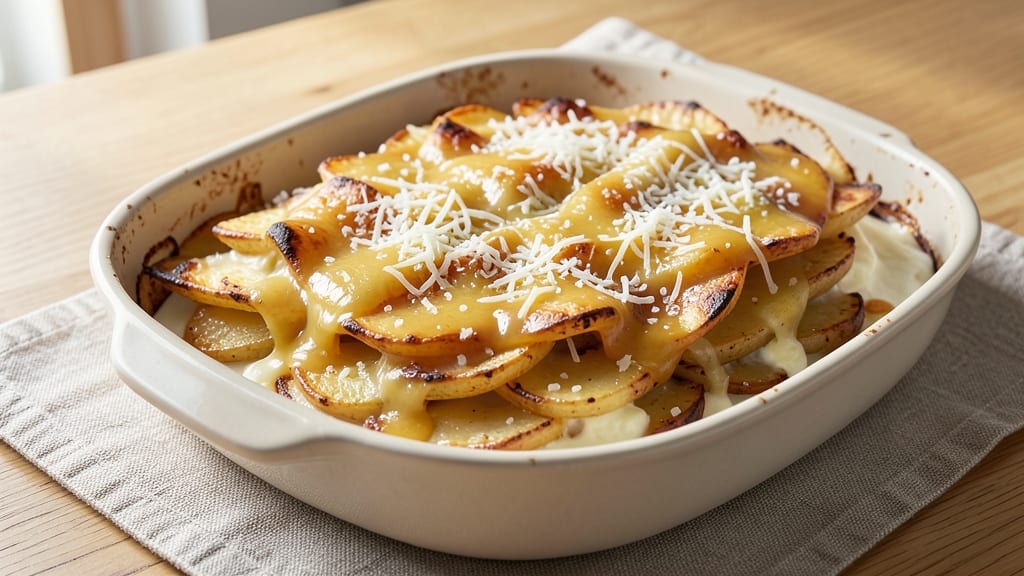
This baked cheese scalloped potatoes recipe delivers the perfect balance of crispy golden crust and creamy, cheesy layers in a single pan. The secret lies in thinly sliced potatoes layered with sharp cheddar and a creamy sauce that transforms into a velvety, bubbling topping when baked.
I've perfected this technique over years of testing—no soggy middles or bland flavors here.
The beauty of this dish is its simplicity: just a few ingredients, minimal prep, and about 45 minutes in the oven at 375°F. The potatoes absorb the rich, cheesy sauce while developing a satisfyingly crispy exterior that holds up beautifully when sliced.
This recipe works as a standalone side or pairs effortlessly with roasted meats, making it a weeknight staple.
What you'll end up with is a dish that's impossible to resist—each forkful delivers tender potatoes, melted cheese, and that irresistible crispy crust. The layers stay intact when sliced, ensuring every bite has the perfect texture combination.
Whether you're feeding a family or hosting a dinner party, this scalloped potatoes recipe always impresses.
For extra flavor, consider adding crispy bacon between layers or sprinkling fresh herbs on top before baking. The possibilities are endless, but the foundation remains the same: foolproof, delicious, and guaranteed to disappear quickly. Let's get started on creating this comforting classic.
Ingredients for baked cheese scalloped potatoes
Master the art of crispy crust and gooey layers with these twelve essential ingredients.
| Ingredient | Amount | Notes |
|---|---|---|
| Russet Potatoes 🥔 | 2 lb | Thinly sliced (1/8-inch thick), peeled |
| Sharp White Cheddar Cheese 🧀 | 1 ½ cups | Freshly grated, block preferred |
| Heavy Cream 🥛 | 1 cup | Full-fat for optimal creaminess |
| Whole Milk 🥛 | ½ cup | Warmed slightly for smooth sauce |
| Unsalted Butter 🧈 | 4 tbsp | Cold, cubed for even melting |
| Diamond Crystal Kosher Salt 🧂 | 1 ½ tsp | Adjust to taste, measure carefully |
| Freshly Ground Black Pepper 🌶️ | ½ tsp | Coarsely cracked for texture |
| Garlic Cloves 🧄 | 3 cloves | Minced finely for subtle flavor |
| All-Purpose Flour 🌾 | 2 tbsp | For thickening the sauce |
| Fresh Thyme Leaves 🌿 | ¼ cup | Chopped, for aromatic depth |
| Crispy Bacon 🥓 | 4 oz | Optional, crumbled between layers |
| Panko Breadcrumbs 🍞 | ¼ cup | For extra crispy topping |
The potatoes are the foundation—russets deliver the ideal starch-to-moisture balance for that signature crispy exterior. Look for firm, unblemished tubers with smooth skins at Whole Foods or your local market's produce section. Thin slicing is critical; a mandoline ensures even cuts, but a sharp chef's knife works too. For the cheese, sharp white cheddar (like Cabot or Tillamook) melts more smoothly than mild varieties. The heavy cream and milk should be room temperature when mixed to prevent lumps in the sauce—warm slightly in the microwave for 20 seconds if needed. Butter matters here too: European-style unsalted (like Plugrá) adds richness without overpowering the dish.
No sharp cheddar? Pepper jack adds heat, or Gruyère for nutty depth. Substitute heavy cream with half-and-half if needed, but the sauce will be slightly lighter. Fresh thyme is ideal, but dried thyme at one-third the amount works in a pinch (just toast it briefly in a dry pan first). For extra crispiness, crushed potato chips replace panko—same texture, no cooking required. The bacon is optional but recommended; thick-cut applewood-smoked bacon from Costco or Trader Joe's adds smoky contrast. If omitting, increase cheese by 0.25 cups for extra richness.
Prep the potatoes immediately after slicing to prevent browning—toss them in cold water while you assemble the sauce. The sauce can be made 1 day ahead and refrigerated; bring to room temperature before layering. For best results, bake directly from the fridge—the cold sauce helps prevent over-browning. Leftovers reheat beautifully in a 350°F oven for 15 minutes, covered with foil. Store in an airtight container for up to 4 days in the fridge. The crispy topping softens when reheated, so consider adding fresh breadcrumbs on top before reheating for that satisfying crunch.
Why You'll Love This Recipe
- One-Pan Magic: I swear by this—just slice, layer, and bake. No chopping boards to wash, no extra pots, just that golden, bubbling mess in one sheet pan. (Yes, even on a Tuesday night when I’m exhausted.)
- Cheese Overload: That sharp white cheddar? It’s the star—melty, salty, and just tangy enough to make your taste buds dance. The heavy cream and butter turn it into something dangerously addictive, like a hug for your mouth.
- Leftovers? No Problem: This keeps perfectly for days, so I make a big batch and reheat slices for breakfast or lunch. (Pro tip: the second day is even better—crispier edges, all the cheese still gooey.)
- Budget-Friendly Feast: Russets are cheap, cheddar stretches far, and you’re using basic pantry staples. For under $10, I feed four people a dish that feels fancy—no one has to know it’s my go-to cheap-eats secret.
Step-by-step instructions for baked cheese scalloped potatoes
Mastering this dish delivers that coveted crispy crust with perfectly creamy, cheesy layers—every time.
Prepare the Potato Layers with Precision
Peel the 2 lb russet potatoes and slice them into ⅛-inch thick rounds using a mandoline or sharp knife. I prefer a mandoline for uniform slices—this ensures even cooking and prevents some slices from drying out while others remain undercooked. Soak the sliced potatoes in cold water for 10 minutes to remove excess starch, then drain and pat completely dry with paper towels. Starchy potatoes create a gluey layer instead of the crispy crust we want.
In a large bowl, toss the dried potato slices with ½ teaspoon of the kosher salt and ¼ teaspoon of the black pepper. This early seasoning helps draw out moisture and enhances flavor as they cook. Arrange the potatoes in a single layer on a parchment-lined baking sheet, ensuring they don't overlap. This step prevents uneven cooking and ensures each slice gets properly crisped.
Build the Creamy Cheese Sauce Foundation
In a medium saucepan, combine the 1 cup heavy cream, ½ cup whole milk, 4 tablespoons unsalted butter, 2 tablespoons all-purpose flour, ½ teaspoon kosher salt, and ¼ teaspoon black pepper. Whisk over medium heat until the mixture thickens to a smooth, pudding-like consistency—this should take about 5-7 minutes. The sauce should coat the back of a spoon and leave a slight sheen.
Remove the saucepan from heat and stir in the 1.5 cups freshly grated sharp white cheddar cheese and 3 minced garlic cloves. Let the cheese melt completely, stirring constantly to prevent clumping. For extra depth, fold in the ¼ cup chopped fresh thyme leaves. If using the 4 oz crispy bacon, crumble it between layers later—this adds a smoky contrast to the creamy cheese. The sauce should be velvety and thick enough to cling to the potatoes without being gluey.
Assemble the Scalloped Potatoes in Layers
Preheat your oven to 375°F. Lightly grease a 9x13-inch baking dish with butter or oil to prevent sticking. Begin by layering ⅓ of the potato slices in the dish, slightly overlapping them. Spread ⅓ of the cheese sauce evenly over the potatoes, then sprinkle ⅓ of the panko breadcrumbs on top. Repeat this process with the remaining potatoes and sauce, finishing with the last layer of potatoes topped with the remaining sauce and breadcrumbs.
Press down gently on the top layer to ensure good contact with the sauce. This prevents air pockets and guarantees that every slice gets that crispy crust. The panko breadcrumbs are key—they create a golden, crunchy top that contrasts beautifully with the creamy interior. For extra crispiness, I like to broil for 2-3 minutes at the end, but we'll cover that in the final step.
Bake to Golden Perfection with Crispy Crust
Place the baking dish in the preheated oven and bake for 45-50 minutes until the edges are deep golden brown and the top is crispy. You'll know it's ready when the cheese is fully melted and the crust has developed a caramelized hue. If the top isn't browning enough, tent the dish with foil for the last 10 minutes to prevent over-browning, then uncover and broil for 2-3 minutes at the end for that perfect crisp.
Let the scalloped potatoes rest for 10 minutes before serving. This resting period allows the layers to set slightly, making it easier to slice and preventing a runny cheese disaster. The result should be a dish with a crispy, golden crust on top, creamy cheese layers that pull slightly when cut, and tender potatoes throughout. Serve immediately with a simple green salad or roasted vegetables to balance the richness.
Pro Tips For Making Baked Cheese Scalloped Potatoes
- CUT POTATOES THIN AND EVEN: I learned this the hard way—uneven slices mean some potatoes stay doughy while others turn to mush. Use a mandoline if you’re impatient (yes, even if you’re impatient like me), but if you’re doing it by hand, aim for ¼-inch slices and keep them consistent. The goal is for every piece to cook at the same pace so nothing gets left behind.
- GRATE CHEESE FRESH—NO SUBSTITUTES: Pre-shredded cheese has anti-caking agents that make the sauce grainy and watery. Instead, buy a block of sharp white cheddar and grate it yourself—it melts smoother and tastes richer. If you’re in a rush, at least pat the shreds dry with a paper towel to remove excess moisture before mixing it into the cream.
- BAKE COVERED FIRST, THEN UNCOVERED: Start with foil on tight for the first 45 minutes—this helps the potatoes absorb the creamy sauce without turning to scrambled eggs. After that, uncover and crank the broiler for 3-5 minutes to get a golden, bubbly crust. (Pro move: Spritz the top with a little milk first for extra browning.)
- SALT THE POTATO WATER LIKE THE OCEAN: Russets need a heavily salted bath (think 2 tablespoons per 4 quarts of water) to develop flavor before they even hit the oven. Skimp here, and your scallops will taste bland no matter how much cheese you add. Trust me, your taste buds will notice the difference.
Regional styles of these flavors
New England Classic
This is how scalloped potatoes originated in the 19th-century kitchens of New England, where farmers needed hearty, filling sides to pair with roasted meats. The original version used only potatoes, cream, cheese, and butter—no fancy add-ins.
I still make it this way sometimes, especially for Thanksgiving, because that simple combination delivers the most satisfying texture contrast. The key difference is using extra-sharp Vermont cheddar (like Cabot) and baking in a cast-iron skillet for deeper browning.
Serve with maple syrup drizzled on top for a sweet-savory balance. 🧀
French Au Gratin
French cooks elevated scalloped potatoes to gratin dauphinois by using Beurre Noisette (browned butter) and Gruyère cheese instead of cheddar. The French version replaces cream with heavy cream and whole milk in equal parts, creating a silkier sauce.
I add a splash of dry white wine (like Sancerre) to the sauce for brightness, and finish with toasted hazelnuts on top for crunch. The dish bakes longer at 350°F for a more delicate crust. Pair it with coq au vin for an authentic French meal. 🍷
Southern Casserole
Southern cooks take scalloped potatoes to the next level by adding crispy fried onions and bacon between layers, then topping with cornbread crumbs instead of panko. The Southern version often includes cream cheese mixed into the sauce for extra richness.
I like to use white cheddar and Monterey Jack for a milder flavor that kids love. Bake at 350°F for 50-60 minutes until the cornbread topping is golden. This version is perfect for feeding a crowd at a tailgate or church potluck. 🥓
Italian Potato Gratin
In Italy, this dish becomes patate al forno with a Mediterranean twist—Parmigiano-Reggiano replaces cheddar, and the sauce incorporates rosemary and nutmeg instead of thyme. I add sun-dried tomatoes and fresh basil between layers for brightness. The Italian version often includes potato starch (instead of flour) to thicken the sauce.
Bake in a ceramic baking dish for even heat distribution. This lighter, herby version pairs beautifully with grilled lamb chops or a simple caprese salad. 🌿
German Kartoffelauflauf
German scalloped potatoes (Kartoffelauflauf) use Apfelwein (apple cider) in the sauce and Emmentaler cheese for a nutty flavor. The dish often includes caramelized onions and crispy potatoes on the bottom layer. I like to add a pinch of mace (a warm spice similar to nutmeg) to the sauce.
The German version bakes at 325°F for a slower, more even cook. Serve with sauerkraut and bratwurst for a complete German feast. 🍺
Modern Fusion Twist
For a contemporary take, I've experimented with smoked gouda and pepper jack for a spicy kick, topped with crushed tortilla chips for a Tex-Mex vibe. Another favorite is blue cheese and walnuts for a sophisticated twist. The fusion version often includes chipotle powder in the sauce for heat.
Bake at 375°F for 40 minutes, then broil for 3 minutes to get that perfect crisp. This works as a standalone dish or alongside grilled shrimp tacos. 🌶️
Nutrition facts
Frequently asked questions
Why do my scalloped potatoes turn out soggy instead of crispy?
Soggy scalloped potatoes usually happen from two common mistakes: uneven potato thickness or overmixing the sauce. Use a mandoline for ⅛-inch slices and pat them completely dry after soaking. Also, stir the sauce just until thickened—overmixing creates gluten that makes the sauce gummy. For extra crispiness, broil for 2-3 minutes at the end while watching closely.
Can I make this recipe ahead of time?
Yes! Assemble the dish in a baking dish, cover tightly with foil, and refrigerate for up to 24 hours. Bake directly from the fridge at 375°F for 55-65 minutes, adding 10-15 minutes to the original time. The cold start prevents over-browning. For reheating leftovers, cover with foil and bake at 350°F for 15 minutes—the crispy topping will soften slightly.
What's the best cheese substitute if I don't have sharp cheddar?
For a similar melt, try Gruyère (nutty flavor) or Pepper Jack (spicy kick). Monterey Jack works for milder taste, while Parmesan adds saltiness—use half the amount. Avoid pre-shredded cheese (it contains anti-caking agents that prevent smooth melting). If you're feeling adventurous, try blue cheese crumbles for a bold twist.
How do I prevent the sauce from separating or getting grainy?
Grainy sauce happens when cheese melts too fast or butter separates. Always melt the cheese off low heat, whisking constantly. For extra insurance, whisk the flour into the warm milk/cream first to create a smooth roux before adding cheese. If your sauce separates, whisk in 1 tablespoon cold butter to emulsify. Keep the oven at 375°F—higher temps can cause the sauce to break.
Can I use sweet potatoes instead of russets?
Sweet potatoes work beautifully! Their natural sweetness pairs well with cheese, but they have different moisture content. Slice them ⅛-inch thick and soak in cold water for 15 minutes to remove excess starch. Reduce the baking time by 5-10 minutes since they cook faster. For extra flavor, add ½ teaspoon cinnamon to the sauce. The texture will be slightly denser but equally delicious.