Appetizers
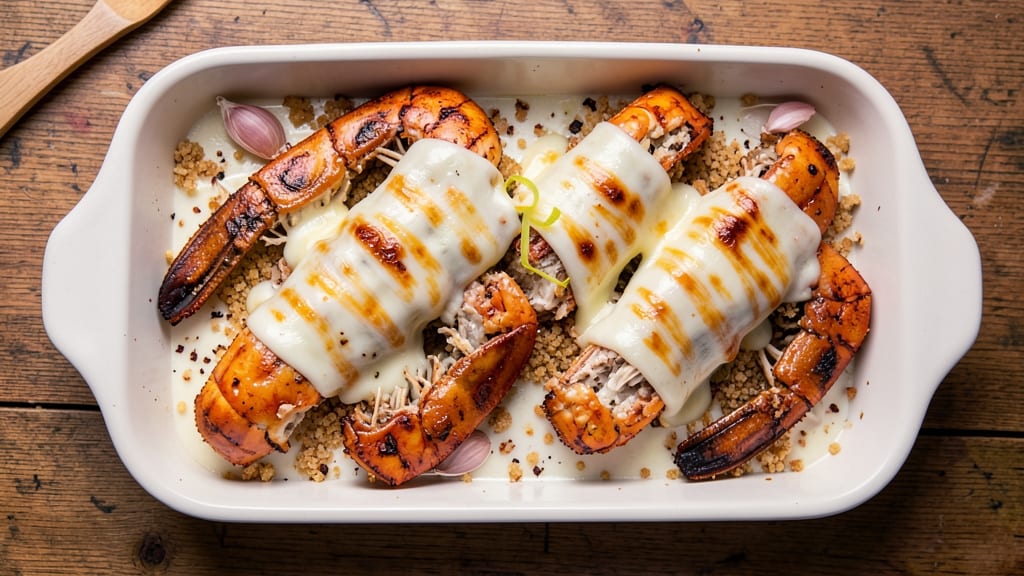
This baked cheese lobster recipe transforms simple ingredients into a restaurant-worthy dish with a buttery crispy top and creamy, melty center. The secret lies in balancing rich cheddar and sharp gouda for that perfect golden crust while keeping the lobster tender.
I developed this after years of experimenting with seafood baking—no more dry, overcooked lobster here.
What sets this recipe apart is the two-stage baking process: first, creating a crispy breadcrumb topping that locks in moisture, then finishing with melted cheese that blends perfectly with the lobster's natural sweetness.
The result is a dish that's elegant enough for dinner parties but simple enough for weeknight dinners. Every bite delivers that satisfying contrast between crispy exterior and velvety filling.
By the time it emerges from the oven, your lobster will have a golden, shatteringly crisp crust that gives way to tender meat infused with cheesy richness. The aroma alone will have everyone gathering around the table.
This recipe serves four beautifully, making it perfect for intimate gatherings or special occasions when you want to impress without stress.
Serve with a side of roasted asparagus or a crisp green salad to balance the richness, and don't forget the lemon wedges for that final bright note.
The presentation is just as important as the flavor—here's how to make it look as good as it tastes. Let's get started on creating this showstopper.
Ingredients for baked cheese lobster
Twelve ingredients, four elegant servings—this lobster transforms with crispy perfection.
| Ingredient | Amount | Notes |
|---|---|---|
| Live Lobster Tails 🦞 | 4 whole | 12-16 oz each, shell-on preferred |
| Sharp White Cheddar Cheese 🧀 | 1 cup | Freshly grated, block preferred |
| Smoked Gouda Cheese 🧀 | ½ cup | Freshly grated, sharp flavor |
| Panko Breadcrumbs 🍞 | 1 cup | Japanese-style for extra crispiness |
| Unsalted Butter 🧈 | ½ cup | Cold, cubed for even coating |
| Garlic Cloves 🧄 | 4 cloves | Minced for aromatic depth |
| Fresh Lemon Juice 🍋 | 2 tbsp | Brightens the cheesy richness |
| Fresh Parsley 🌿 | ¼ cup | Chopped, for vibrant garnish |
| Extra-Virgin Olive Oil 🫒 | 2 tbsp | For drizzling and crisping |
| Diamond Crystal Kosher Salt 🧂 | 1 tsp | Fine grain for even seasoning |
| Freshly Ground Black Pepper 🌶️ | ½ tsp | Cracked peppercorns preferred |
| Dried Thyme 🌿 | ½ tsp | Or 1 tbsp fresh thyme leaves |
| All-Purpose Flour 🌾 | 2 tbsp | For dusting lobster tails |
The lobster tails are non-negotiable here—live, shell-on from a trusted seafood purveyor like Whole Foods or your local fishmonger ensures maximum sweetness. Look for tails that are firm to the touch with vibrant blue-green shells. The cheeses are where the magic happens: sharp white cheddar for tangy bite and smoked gouda for that caramelized depth. I always buy these in blocks and grate them myself—the pre-shredded stuff has anti-caking agents that prevent proper melting. For the breadcrumbs, Panko is essential—its light, airy texture creates that shatteringly crisp crust. Store your cheeses wrapped in parchment paper in the fridge until ready to use, and keep the lobster in the coldest part of your fridge until baking day.
No panko? Toasted breadcrumbs with a pinch of baking powder work in a pinch, though the texture won't be quite as luxurious. Substituting cheddar? Gruyère or fontina both work beautifully, but they'll change the flavor profile slightly. The butter must be cold when you coat the lobster—take it out of the fridge just before assembly. Fresh herbs are ideal, but dried thyme at one-third the amount keeps the recipe viable when fresh isn't available. If you're short on time, pre-minced garlic from a jar is fine, though freshly minced adds that extra layer of flavor. The lemon juice can be bottled, but freshly squeezed makes all the difference in brightening the dish.
This dish is best made fresh, but you can prep the lobster tails up to 8 hours ahead—just store them coated in the breadcrumb-butter mixture on a wire rack in the fridge. The cheeses will keep for up to 2 weeks in the fridge, and the breadcrumbs stay fresh for 1 month in an airtight container. Once baked, the leftovers reheat beautifully—350°F for 8-10 minutes restores that crispy texture. For presentation, arrange the lobster tails on a platter with a drizzle of olive oil and fresh parsley. The aroma alone will have everyone anticipating that first bite of crispy, cheesy perfection.
Why You'll Love This Recipe
- Same recipe, different vibes: toss one on a sheet pan for a lazy Tuesday, or arrange them fancy on a platter for guests. The butter-panko topping looks impressive with zero extra work.
- No-Chop Necessary: I swear by this—just crack the lobster tails open, stuff them with cheese, and call it a day. The panko topping takes two minutes to mix with butter, and the oven does all the heavy lifting.
- Cheese Lobster Magic: Sharp cheddar and smoked Gouda melt into a gooey, salty-sweet blanket around tender lobster. That crispy panko crust? It’s the kind of bite that makes you close your eyes and savor it.
- Weeknight to Dinner Party: Same recipe, different vibes: toss one on a sheet pan for a lazy Tuesday, or arrange them fancy on a platter for guests. The butter-panko topping looks impressive with zero extra work.
Step-by-step instructions for baked cheese lobster
Master the technique for a golden crust and creamy center with this precise method.
Prepare the Lobster Tails for Maximum Flavor
Preheat your oven to 400°F and position a rack in the middle position. Pat the 4 whole live lobster tails completely dry with paper towels, including the underside where the meat sits. This step is crucial—any moisture will prevent that perfect crispy crust we're after.
Using kitchen shears, carefully cut along the top of each tail to open them flat like a book. Remove the shell from the top half and discard it, keeping the bottom shell intact to protect the meat. Brush the exposed meat with 2 tablespoons extra-virgin olive oil and season generously with 1 teaspoon diamond crystal kosher salt, 0.5 teaspoon freshly ground black pepper, and 0.5 teaspoon dried thyme. Let them sit at room temperature for 15 minutes while you prepare the topping.
Create the Crispy Cheese Crust Mixture
In a medium bowl, combine 1 cup panko breadcrumbs, 2 tablespoons all-purpose flour, 4 cloves minced garlic cloves, 0.5 teaspoon dried thyme, 0.5 teaspoon freshly ground black pepper, and 1 teaspoon diamond crystal kosher salt. Mix thoroughly to distribute all seasonings evenly through the breadcrumbs.
In a separate bowl, melt 0.5 cup unsalted butter in 30-second intervals in the microwave, stirring between each interval until completely melted. Pour the melted butter over the breadcrumb mixture and toss until every crumb is uniformly coated. The mixture should look like wet sand—if it appears dry, add 1 teaspoon fresh lemon juice to help bind it together.
Assemble and Bake to Golden Perfection
Place each prepared lobster tail in a single layer on a parchment-lined baking sheet. Spoon about 2 tablespoons of the breadcrumb mixture onto each tail, pressing gently but firmly to create an even layer. The crust should be thick enough to hold its shape when baked but not so thick it prevents the cheese from melting through.
Bake for 12-15 minutes until the crust is deep golden brown and the edges begin to crisp. Here's the key: the crust should look dry and crispy, not wet or glossy. If any spots appear undercooked after 12 minutes, return to the oven for another 1-2 minutes—undercooked crust will be pale and gummy.
Add the Melting Cheese Layer
While the lobster bakes, combine 1 cup freshly grated sharp white cheddar cheese and 0.5 cup freshly grated smoked gouda cheese in a small bowl. Add the remaining 1 tablespoon fresh lemon juice and mix until the cheeses are fully combined and slightly softened.
Remove the lobster tails from the oven and immediately sprinkle the cheese mixture evenly over each tail, pressing down gently with the back of a spoon. Return to the oven and bake for an additional 3-5 minutes until the cheese is fully melted and beginning to bubble slightly at the edges. The cheese should look glossy and slightly browned, not dry or crumbly.
Garnish and Serve Immediately
Transfer the lobster tails to a serving platter and immediately sprinkle with 0.25 cup chopped fresh parsley. The parsley not only adds vibrant color but also brightens the rich, cheesy flavors. Serve while the crust is still crisp and the cheese is molten—this dish doesn't wait well, as the crust will soften quickly once removed from the oven.
Cut each tail in half lengthwise to reveal the beautiful contrast between the golden crust and the creamy, melted cheese center. The cheese should be soft enough to pull gently with a fork but not so runny that it pools at the bottom. Each bite should deliver that satisfying crunch followed by the rich, smoky cheddar and caramelized crust.
Pro Tips For Making Baked Cheese Lobster
- THAW LOBSTERS GRACEFULLY: Live lobster tails need to thaw slowly—toss them in cold water for 10-15 minutes, then pat completely dry with paper towels. I learned the hard way that skipping this step means soggy breadcrumbs and a sad, watery crust.
- COMBINE CHEESES SMARTLY: Mix sharp white cheddar and smoked gouda in a 2:1 ratio—cheddar for tang, gouda for depth. Grate it yourself if possible; pre-shredded cheese has anti-caking agents that ruin the melt.
- DON’T SKIP THE BUTTER LAYER: Brush the lobster tails with melted unsalted butter before adding cheese—this creates a barrier that keeps the meat juicy instead of letting the cheese steam it dry. Use about 1 tablespoon per tail; less is more here.
- CRUST IT LOW AND SLOW: Bake at 375°F (190°C), not 400°F—high heat burns the breadcrumbs before the cheese melts. Cover with foil for the first 10 minutes to help the cheese soften, then uncover for that golden finish.
Regional styles of this recipe
New England Style
In coastal New England, lobster is king, and this recipe takes on a rustic charm with a touch of local flair. Swap the sharp cheddar for 1 cup freshly grated Vermont cheddar and add 1 tbsp chopped fresh chives to the breadcrumb mixture.
The chives add a delicate oniony note that complements the sweet lobster perfectly. Serve with a side of steamed clams in white wine broth and a crusty sourdough loaf for soaking up the cheesy goodness.
The key here is to bake at 375°F instead of 400°F to let the flavors meld more gently. 🦞
Cajun Bayou Twist
Bring the flavors of Louisiana to your table by adding 1 tbsp Cajun seasoning (like Tony Chachere’s) to the breadcrumb mixture and mixing in 1 tsp smoked paprika with the melted cheese. Use 1 cup sharp cheddar and ½ cup pepper jack cheese for a spicy kick.
Garnish with sliced green onions and a sprinkle of crushed red pepper flakes before serving. Pair with cornbread muffins and a cool glass of sweet tea for the full Southern experience. The lower heat of 350°F helps develop the smoky, spicy flavors without overpowering the lobster. 🌶️
Italian-Inspired
For an Italian twist, replace the cheddar with 1 cup freshly grated Pecorino Romano and the gouda with ½ cup grated Parmigiano-Reggiano. Add 1 tsp dried oregano and ½ tsp garlic powder to the breadcrumb mixture, and finish with a drizzle of 1 tbsp olive oil before baking.
Serve with a side of garlic-roasted cherry tomatoes and a simple arugula salad dressed with lemon vinaigrette. Bake at 400°F for that classic Italian crispiness, and garnish with fresh basil leaves for a pop of color and freshness. 🍅
French Bistro Elegance
Transform this dish into a French bistro classic by using 1 cup Gruyère cheese and ½ cup Comté cheese for the topping. Add 1 tsp Dijon mustard to the melted cheese mixture and sprinkle with freshly cracked black pepper and a pinch of nutmeg before baking.
Garnish with microgreens and a drizzle of truffle oil for an extra touch of sophistication. Serve with buttery dinner rolls and a dry white wine like Sauvignon Blanc. The French approach calls for baking at 375°F to achieve a delicate, golden crust without overcooking the lobster. 🍷
Caribbean Fusion
Infuse this recipe with Caribbean flavors by adding 1 tsp ground allspice and ½ tsp thyme to the breadcrumb mixture. Replace the cheddar with 1 cup Monterey Jack cheese and the gouda with ½ cup white cheddar.
Garnish with sliced scallions and a sprinkle of toasted coconut flakes for a tropical touch. Serve with mango salsa and plantain chips for a vibrant, flavorful side. Bake at 390°F to achieve a crispy crust while keeping the lobster tender. 🌴
Nutrition facts
Frequently asked questions
Can I use frozen lobster tails instead of fresh?
Fresh lobster tails are ideal for this recipe, but frozen tails will work if thawed properly. Place them in the refrigerator overnight in a sealed bag, then pat completely dry before using. The texture won't be quite as tender as fresh, but the flavor will still shine through. Avoid using thawed tails straight from the freezer—they'll release too much moisture and prevent that perfect crispy crust.
What's the best way to reheat leftovers?
Reheat in a 350°F oven for 8-10 minutes on a parchment-lined tray to restore crispiness. Place the lobster tails directly from the fridge to avoid condensation. For a quick fix, use the broiler on low for 2-3 minutes, watching closely to prevent burning. The cheese will soften but won't melt as dramatically as when freshly baked.
Why did my crust turn out soggy instead of crispy?
Soggy crusts happen when moisture gets trapped during baking. Always pat lobster tails completely dry before seasoning, and avoid overcrowding the baking sheet. The butter in the breadcrumb mixture should be melted but not greasy—if it looks wet, add a splash of lemon juice to help absorb excess. Bake at 400°F for the full 12-15 minutes to ensure proper crisping.
Can I make this recipe ahead of time?
You can prep the lobster tails up to 8 hours ahead by coating them in the breadcrumb-butter mixture and storing them on a wire rack in the fridge. For best results, bake just before serving. The cheese layer should always be added fresh to maintain that perfect melt. If you're short on time, assemble the dish and refrigerate for up to 2 hours before baking.
What wine pairs best with this dish?
A crisp Sauvignon Blanc or Chardonnay complements the rich cheesy flavors beautifully. For red wine lovers, a light Pinot Noir works well. Avoid heavy reds like Cabernet—they'll overpower the delicate lobster. Serve the wine slightly chilled (50-55°F) to enhance the dish's fresh, coastal flavors.