
Breakfast & Brunch
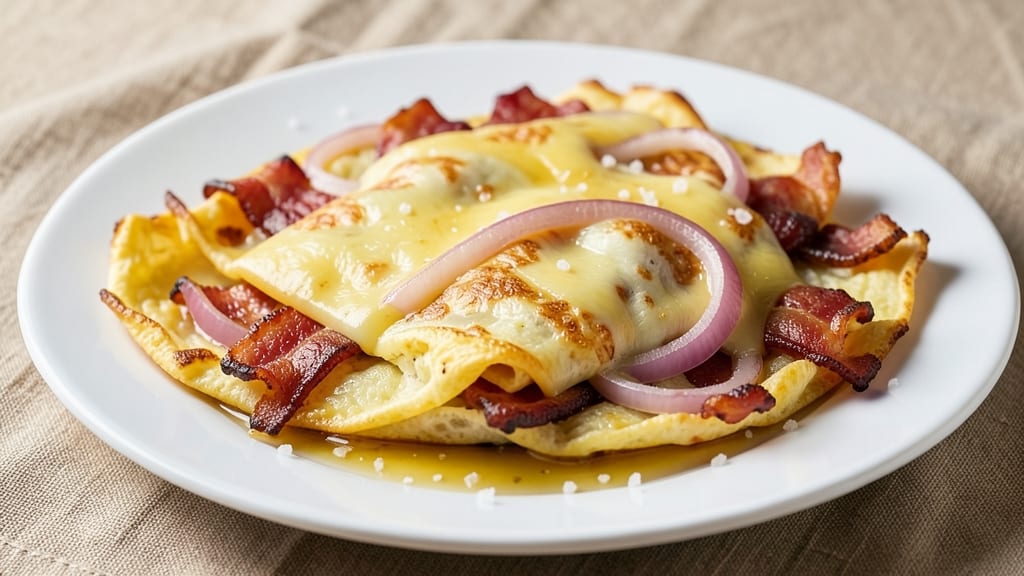
This bacon cheese onion omelette recipe delivers the perfect balance of crispy edges and savory layers in just 15 minutes. The secret lies in cooking the bacon first to render its fat—using it later to create golden, tender edges on the omelette while keeping the inside perfectly set.
I've perfected this method after years of testing, and it never fails to impress, even for breakfast beginners.
What makes this omelette special is the layered texture: crispy bacon bits, caramelized onions, and melted cheese all folded into fluffy egg custard. The onions should be cooked until soft and sweet, while the bacon adds a smoky depth that ties everything together.
A medium heat is critical—too hot, and the edges burn before the center sets; too cool, and the omelette turns rubbery.
By the time you flip that first forkful, you'll taste the harmony of salty bacon, sharp cheddar, and sweet onions all wrapped in tender egg. The crispy edges contrast beautifully with the creamy interior, making every bite satisfying.
This is the kind of omelette that turns a simple breakfast into a restaurant-worthy meal.
Serve it with a side of toast and fresh fruit for a balanced plate, or pair it with a simple green salad for a heartier breakfast. The recipe scales easily, so you can make it for one or a crowd. Let's get cooking!
Ingredients for bacon cheese onion omelette
Six eggs, crispy bacon, and caramelized onions—just what you need for perfect omelette layers.
| Ingredient | Amount | Notes |
|---|---|---|
| Large Eggs 🥚 | 6 whole | Room temperature for best fluffiness |
| Thick-Cut Bacon 🥓 | 6 oz | Applewood smoked preferred |
| Yellow Onion 🧅 | ½ cup | Thinly sliced, sweet variety |
| Sharp Cheddar Cheese 🧀 | ¾ cup | Shredded, block preferred |
| Unsalted Butter 🧈 | 1 tbsp | For crispy edges |
| All-Purpose Flour 🌾 | 1 tsp | For dusting pan |
| Kosher Salt 🧂 | ¼ tsp | Diamond Crystal preferred |
| Ground Black Pepper 🌶️ | ⅛ tsp | Freshly cracked |
| Vegetable Oil 🫒 | 1 tbsp | For nonstick pan |
| Fresh Chives 🌿 | 2 tbsp | Chopped, for garnish |
The bacon is where the magic starts. Thick-cut applewood smoked bacon from Costco or your local butcher shop gives the best flavor and texture. Cook it low and slow until crispy—don't rush, or it'll turn rubbery. The onions? Sweet yellow onions caramelize beautifully, but red onions work too if that's what you've got. I always slice them thinly with a mandoline for even cooking, but a sharp knife works fine. The cheddar matters too—block cheese, freshly shredded melts better than pre-shredded. Grab a wedge from the deli counter if you can.
No bacon? Crispy pancetta or smoked turkey bacon works in a pinch, but trust me, regular bacon is worth it. Short on chives? Green onions or parsley add a nice freshness. The butter is non-negotiable for those crispy edges—unsalted butter gives you control over the saltiness. If you're watching your fat, use a mix of butter and oil, but the edges won't be quite as golden. The eggs should be room temperature for the fluffiest texture—just take them out of the fridge 10 minutes before you start. And if you're making this ahead? Cook the bacon and onions first, then store separately—reheat everything together when you're ready to finish the omelette.
The bacon and onions keep well in the fridge for 4-5 days if stored separately. The shredded cheese stays fresh for 3 days once opened, so buy it fresh. For the crispy edges, butter is your friend—it adds flavor and helps create that perfect texture. If you're prepping for a crowd, make the bacon and onions ahead and reheat them gently before folding into the eggs. This omelette is even better the next day—just reheat everything together in a skillet and fold fresh. Leftovers? Wrap in foil and freeze for up to 1 month—perfect for quick breakfasts.
Why You'll Love This Recipe
- No-Fuss Ingredients: I keep a bag of sharp cheddar and thick-cut bacon in my pantry just for this—no fancy shopping lists, no forgotten spices. Slice the onion while the bacon cooks, whisk the eggs, and you’re done. That’s it. The eggs handle everything else.
- Crispy-Creamy Magic: The secret’s in the butter and timing: melt it in the pan until it’s golden, then let those onions caramelize just until soft—not mushy. Flip the omelette when the edges pull away, and you’ve got that perfect crispy shell with gooey cheese stretching inside. Honestly, it’s the kind of bite that makes you pause mid-morning.
- Weekday Workhorse: This feeds two for breakfast, one for dinner, or four as a brunch side. Leftovers reheat beautifully—just a quick sizzle in the pan with a splash of water to keep things tender. I’ve even packed it cold in a thermos for lazy mornings. (Yes, even on a Tuesday night.)
- Budget Breakfast Win: Thick-cut bacon costs more, but you use half a package per omelette—no waste. Onions and eggs are cheap staples, and sharp chedddar stretches farther than pre-shredded. It’s the kind of meal that doesn’t break the bank but feels like a treat. My college self would’ve cried.
Step-by-step instructions for bacon cheese onion omelette
Here's how to make a perfectly fluffy omelette with crispy bacon and savory layers.
Cook the Bacon Until Crispy
Place the 6 oz thick-cut bacon in a cold, nonstick skillet. Turn the heat to medium-low and let it cook undisturbed for 5 minutes. This slow start prevents burning and renders the fat evenly. After 5 minutes, gently flip the bacon pieces and cook for another 5-7 minutes until they're deep golden brown and crispy.
Remove the bacon from the skillet and transfer to a paper towel-lined plate, leaving the rendered fat behind. This bacon fat is pure flavor gold—don't waste it! If there's not enough fat left in the pan, add 1 tablespoon vegetable oil to ensure your omelette won't stick. The crispy bacon will add texture contrast to your fluffy omelette.
Sauté the Onions Until Soft
In the same skillet (with the bacon fat still in it), add the ½ cup thinly sliced yellow onion. Cook over medium heat for 4-5 minutes, stirring occasionally, until the onions are soft and translucent but not browned. You want them to be sweet and tender, not crispy.
If the onions start to stick, add a splash of water or a little more vegetable oil to help them cook evenly. Once they're done, remove the onions from the skillet and set them aside with the bacon. Wipe out any excess grease with a paper towel—you want a clean surface for your omelette to form properly.
Whisk the Eggs for Maximum Fluffiness
In a large bowl, crack the 6 whole large eggs (room temperature is key for fluffiness). Add the 1 tablespoon unsalted butter, 1 teaspoon all-purpose flour, ¼ teaspoon kosher salt, and ⅛ teaspoon ground black pepper. Using a whisk or fork, beat the eggs vigorously for 2-3 minutes until they're completely smooth and frothy.
Here's the thing—whisking incorporates air, which creates that light, airy texture we all love. If you're using room-temperature eggs, they'll blend more easily and give you a better rise. If your eggs are cold, let them sit at room temperature for 10 minutes before whisking. The mixture should look like pale yellow custard.
Cook the Omelette with Perfect Layers
Return the skillet to medium-low heat (you want it warm, not hot). Add the whisked egg mixture and let it sit undisturbed for 10 seconds until the edges begin to set. Then, using a spatula, gently push the cooked edges toward the center, tilting the pan to let the uncooked egg flow to the edges.
When the top is mostly set but still slightly soft in the center (about 1 minute), sprinkle ¾ cup shredded sharp cheddar cheese evenly over one half of the omelette. Then, add half of the cooked bacon and half of the sautéed onions to the same half. Fold the empty half over the filled half, pressing gently to seal. Cook for another 30 seconds until the cheese is melted and the bottom is golden brown.
Finish and Garnish for Restaurant-Quality Results
Slide the omelette onto a warm plate and let it rest for 1 minute—this helps it hold together better. Garnish with the remaining bacon and onions, plus the 2 tablespoons chopped fresh chives. The chives add a fresh, bright note that cuts through the richness of the bacon and cheese.
Serve immediately while the cheese is still gooey and the edges are crispy. This omelette is all about contrast—fluffy eggs, crispy bacon, creamy cheese, and fresh chives. If you want extra crispy edges, you can finish it under the broiler for 10-15 seconds right before serving, but it's not necessary. Enjoy your perfectly balanced breakfast!
Pro Tips For Making Bacon Cheese Onion Omelette
- CRISP THE BACON FIRST: I learned this the hard way—cooking bacon in the same pan as the omelette makes the whole thing greasy and uneven. Crisp it separately in a cold skillet (yes, cold) over medium heat, then drain on paper towels. The bacon stays crispier longer, and your omelette won’t swim in bacon fat.
- SWEAT THE ONION LOW: Skip the sizzle—onions caramelize best when they’re not rushed. Cook them in the same pan you’ll use for the omelette, but keep the heat at a gentle simmer (around 300°F). You’re aiming for translucent, not browned, so resist the urge to crank it up. Overcooked onions turn bitter, and you’ll regret it when they mix into the eggs.
- SALT THE EGGS BEFORE WHISKING: More salt than you think, especially if using unsalted butter. Sprinkle a generous pinch (about ¼ teaspoon per egg) directly into the bowl before cracking them in. This ensures even distribution—no one likes a bland bite in an otherwise perfect omelette. Trust me, your taste buds will notice.
- FOLD IT QUICKLY AT THE END: The moment the bottom sets (about 30 seconds), tilt the pan to let the uncooked egg flow to the edges. Then, fold it like you’re closing a book—fast and firm. If you linger, the cheese will ooze out the sides, and your omelette turns into a sad, runny mess. Practice makes perfect, but even I nail it now.
Pro cooking tips for great bacon cheese onion omelette
Bacon Fat Magic
Never waste that bacon fat! After cooking the bacon, leave it in the pan—it's the secret to crispy, golden edges on your omelette. The fat adds flavor and prevents sticking. If there's not enough, add 1 tablespoon vegetable oil to ensure your omelette doesn't stick.
I always keep a small jar in the fridge to use later for cooking potatoes or toast. 🔥
Onion Caramelization
For perfectly sweet onions, cook them low and slow until they're translucent but not browned. If they start to stick, add a splash of water or a pinch of salt to help them release.
I like to use sweet yellow onions because they caramelize more easily, but red onions work too if you prefer a milder flavor. The goal is soft, tender onions that melt into the eggs beautifully.
Egg Whisking Secrets
Room-temperature eggs whisk up fluffier and cook more evenly. If your eggs are straight from the fridge, let them sit for 10 minutes before whisking. Beat them vigorously for 2-3 minutes until completely smooth—this incorporates air for that light, airy texture.
A handheld immersion blender works great if you don't want to wash extra bowls. 🥚
Heat Control
Medium-low heat is key for even cooking. Too hot, and the edges burn before the center sets. Too cool, and the omelette turns rubbery. I use a digital thermometer to keep my pan between 275-300°F.
If your pan isn't hot enough, the eggs will stick—always wipe out excess grease before adding the egg mixture.
Folding Technique
When folding, work quickly but gently. Sprinkle the cheese on one half first, then add the bacon and onions. Fold the empty half over the filling, pressing lightly to seal.
Cook for just 30 seconds more to melt the cheese completely. Practice makes perfect—I've dropped more omelettes than I'd like to admit, but the technique gets easier with time. 💫
Garnish Like a Pro
Fresh chives add brightness and color. Chop them finely and sprinkle them over the top right before serving. The contrast of crispy bacon, creamy cheese, and fresh herbs makes every bite exciting.
For extra flair, add a drizzle of hot honey or a sprinkle of crumbled feta if you want to experiment with flavors.
Nutrition facts
Frequently asked questions
Can I make this omelette without bacon?
Swap the bacon for crispy pancetta or smoked turkey bacon for a similar flavor profile. For a vegetarian version, try sautéed mushrooms, spinach, or crispy chickpeas instead—they'll add great texture contrast. Just adjust the cooking time slightly since plant-based ingredients may release more moisture.
Why does my omelette turn out rubbery?
Rubbery omelettes usually happen when the heat is too low or the eggs are overcooked. Keep your pan at medium-low heat (275-300°F) and cook just until the center is set but still slightly soft. Overcooking dries out the eggs—remove from heat when the top is mostly firm but still slightly jiggly. A digital thermometer helps maintain perfect temperature.
How do I make this for one person?
Scale everything down by half: use 3 eggs, 3 oz bacon, ¼ cup onions, and ⅓ cup cheese. Cook the bacon and onions first, then whisk the eggs and cook in the same pan. Fold the omelette and serve immediately. The technique stays the same—just smaller portions! Perfect for a quick solo breakfast.
What's the best cheese substitute if I don't have cheddar?
Any melty cheese works! Try Gruyère for nutty depth, Gouda for caramelized sweetness, or feta for tangy brightness. Avoid pre-shredded cheese—it contains anti-caking agents that prevent proper melting. Freshly shredded block cheese always melts best. For a dairy-free option, use nutritional yeast or vegan cheese shreds.
Can I make this ahead of time?
Yes! Cook the bacon and onions first, then store them separately in the fridge for up to 4-5 days. When ready to serve, reheat everything together in a skillet, then fold fresh eggs around them. For freezing, wrap the cooked omelette in foil and freeze for up to 1 month. Reheat gently in a pan to restore crispiness. The texture won't be as perfect as fresh, but it's still delicious.