
Soups & Stews
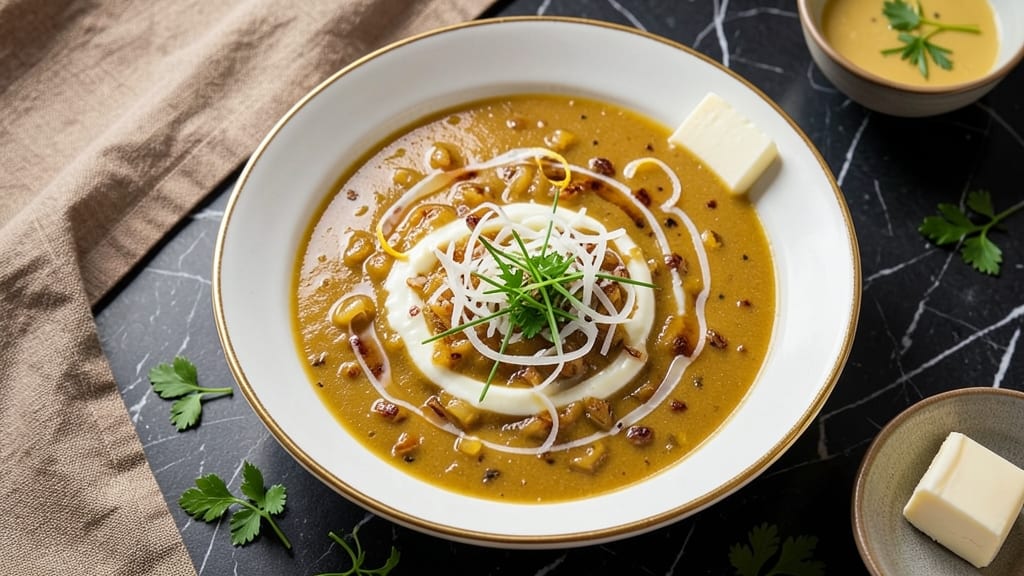
This Asiago cheese bisque soup delivers restaurant-quality richness with a velvety texture and nutty depth from aged Asiago. The secret lies in slow-cooked aromatics and a toasted herb crust that adds irresistible texture.
What sets this apart is balancing creamy indulgence with bright, herby notes that keep it from feeling heavy.
We begin with classic French technique—sweating onions and garlic until deeply caramelized—before building the base with vegetable broth and a splash of white wine. The Asiago cheese melts into the simmering liquid, creating that signature velvety consistency without requiring heavy cream.
A high-speed blend ensures silky smoothness while preserving the cheese's distinct nutty flavor.
The finishing touches elevate this soup from ordinary to extraordinary: a golden toasted herb crust made from breadcrumbs, butter, and fresh parsley that adds crunch and visual appeal. Optional garnishes like a drizzle of truffle oil or extra grated Asiago take it to gourmet levels.
The result is a soup that's creamy yet light, rich yet balanced—perfect for chilly evenings or special occasions.
This recipe yields about 6 servings, making it ideal for family dinners or entertaining. The method is straightforward but requires patience for the best results. Each spoonful delivers that perfect marriage of creamy comfort and sophisticated flavor that defines great bisque.
Ingredients for asiago cheese bisque soup
Sixteen ingredients transform into velvety Asiago bisque with restaurant-quality depth.
| Ingredient | Amount | Notes |
|---|---|---|
| Yellow Onions 🧅 | 2 whole | Thinly sliced, caramelized slow |
| Garlic Cloves 🧄 | 4 cloves | Peeled, minced for depth |
| Asiago Cheese 🧀 | 1 ½ cups | Shredded, aged for nutty flavor |
| Vegetable Broth 💧 | 4 cups | Low-sodium, homemade or quality |
| Dry White Wine 🍷 | ½ cup | Sauvignon Blanc or Pinot Grigio |
| Unsalted Butter 🧈 | 4 tbsp | European-style, cold for crust |
| All-Purpose Flour 🌾 | 2 tbsp | For thickening base smoothly |
| Fresh Parsley 🌿 | ¼ cup | Chopped, stems included for crust |
| Panko Breadcrumbs 🍞 | ½ cup | Toasted for golden texture |
| Truffle Oil 🍄 | 1 tsp | Optional, for gourmet finish |
| Salt 🧂 | 1 ½ tsp | Kosher, adjust to taste |
| Black Pepper 🌶️ | ½ tsp | Freshly cracked for heat |
| Heavy Cream 🥛 | ½ cup | Optional, for extra richness |
The Asiago cheese is non-negotiable here—aged 10+ months for that signature nutty punch. Gourmet shops or specialty cheese counters carry the good stuff, but Whole Foods usually has a solid block. Look for vibrant color and no cracks—those mean it's been sitting too long. The vegetable broth? Homemade is ideal, but Pacific Foods or Imagine brands are solid shortcuts. For the wine, anything crisp and dry works—Sutter Home Sauvignon Blanc is my go-to for cooking. Fresh parsley matters too—flat-leaf variety has more flavor than curly, and Trader Joe's sells it pre-washed in those little containers.
No Asiago? Gruyère or Parmigiano-Reggiano work in a pinch, but the flavor won't be identical. Short on white wine? Dry vermouth or apple cider adds acidity. The crust can be made ahead—just toast the breadcrumbs and store in a jar with the parsley until ready to use. For a dairy-free version, swap the heavy cream for full-fat coconut milk (though it'll taste different). The Panko? Don't skip toasting it—that's what gives it that golden crunch. If you're feeling fancy, toasted hazelnuts in the crust add another layer of texture.
This soup tastes even better the next day—4-5 days in the fridge, 3 months frozen. The crust keeps separately for 1 week if wrapped tightly. For serving, I like to portion the soup into bowls first, then sprinkle the crust on top so everyone gets that crunchy goodness. Garnish with extra Asiago and a drizzle of truffle oil right before eating—that's when it gets fancy. Leftovers reheat beautifully, just stir in a splash of broth or water if it gets too thick.
Why You'll Love This Recipe
- Minimal Chopping Needed: I swear by this—just dice one onion and crush a few garlic cloves. The rest? Stir, simmer, blend. No finicky prep, just flavor.
- Wine-Infused Richness: That splash of dry white wine cuts through the creaminess while the Asiago melts into velvety perfection. Honestly, it’s the kind of soup that makes you linger over seconds.
- Weeknight Crowd-Pleaser: Serve it with crusty bread and a side salad for a meal that feels fancy but costs next to nothing. My in-laws rave about it—even the ones who "don’t like soup."
- Leftovers That Taste Better: The flavors deepen overnight, and it reheats like a dream. Freeze half for lazy days—just add a splash of broth to loosen it up. No waste, all comfort.
Step-by-step instructions for Asiago cheese bisque soup
This rich, velvety bisque transforms humble ingredients into a luxurious bowl of comfort.
🍳 Step 1: Sauté Onions Until Deeply Caramelized
Melt 2 tablespoons of the unsalted butter in a large Dutch oven over medium-low heat. Add the 2 whole yellow onions, thinly sliced, and cook them undisturbed for 5 minutes until they soften slightly. Here's the thing—don't rush this step. Stir occasionally and let those onions develop a deep golden color, about 20-25 minutes total, until they're sweet and jammy.
Real talk: The longer you cook them, the more complex the flavor. You'll know they're ready when they're almost translucent with rich brown spots. If they start to stick, add a splash of the vegetable broth to deglaze. This caramelization builds the flavor foundation for your entire soup.
🍳 Step 2: Build the Roux and Add Aromatics
Push the onions to one side of the pot and add the remaining 2 tablespoons unsalted butter to the empty space. When melted, whisk in the 2 tablespoons all-purpose flour to form a smooth paste. Cook this roux for 2 minutes until it turns a pale golden color—this prevents a raw flour taste.
Add the 4 cloves minced garlic and stir for 30 seconds until fragrant. Immediately pour in the 0.5 cup dry white wine and scrape up any browned bits from the bottom of the pot. This deglazing captures all those flavorful bits that would otherwise go to waste. Let the wine simmer for 2-3 minutes until mostly evaporated.
🍳 Step 3: Simmer the Broth and Incorporate Cheese
Pour in the 4 cups vegetable broth and bring to a gentle simmer. Stir in 1 teaspoon salt and 0.5 teaspoon black pepper, then add the 1.5 cups shredded Asiago cheese. Let the soup simmer for 10 minutes until the cheese is completely melted and the flavors meld together.
Here's where it gets fun—taste and adjust seasoning. You might need more salt depending on your broth. The soup should be rich and velvety, with a noticeable nutty cheese flavor. If it's too thick, whisk in a splash of warm water or broth. If you're using the 0.5 cup heavy cream, stir it in now and simmer for another 5 minutes to heat through.
🥘 Step 4: Prepare the Toasted Herb Crust
While the soup simmers, toast the 0.5 cup panko breadcrumbs in a dry skillet over medium heat for 3-4 minutes until golden brown. Remove from heat and stir in the 0.25 cup chopped fresh parsley and 1 teaspoon truffle oil (if using). Set aside.
This crust adds a delightful textural contrast to the silky soup. The toasted breadcrumbs provide crunch, while the parsley and truffle oil add freshness and depth. If you don't have truffle oil, a sprinkle of freshly grated Parmesan works too.
🍽️ Step 5: Serve with Crust and Garnish
Ladle the hot soup into bowls, then immediately sprinkle each serving with about 1 tablespoon of the toasted herb crust. The contrast of the warm, creamy soup against the cool, crispy crust is what makes this dish truly special.
For extra richness, top with a drizzle of truffle oil or a swirl of heavy cream. Serve immediately while the crust is still crisp. The soup should be smooth and velvety, with a perfect balance of savory, nutty Asiago flavor and the bright acidity from the wine. Each spoonful should feel luxurious and comforting.
Pro Tips For Making Asiago Cheese Bisque Soup
- Sweat, Don’t Burn: Onions and garlic are the soul of this soup—don’t rush them. Cook the onions over medium-low heat for 10-12 minutes until they’re deep golden, almost caramelized, then add the garlic for just 30 seconds. I learned this the hard way: charred garlic turns bitter, and no amount of wine can fix that.
- Shave the Asiago: Skip the shredder and use a microplane or sharp knife to shave the Asiago into the soup. This creates a silkier texture and melts faster—no clumps, no waiting for cheese to dissolve. (Yes, it’s more work, but your future self will notice the difference.)
- Deglaze Before Wine: After cooking the onions and garlic, splash in a splash of vegetable broth first—just enough to loosen the browned bits. Then add the wine. This ensures you’re not wasting flavor (and alcohol) stuck to the pot. I used to skip this, and the soup always tasted duller.
- Strain for Smoothness: If you want a velvety finish, strain the soup through a fine-mesh sieve after simmering but before adding the cheese. It’s extra effort, but the result is restaurant-quality. (I know, I know—sometimes I skip it too, but the texture is worth it.)
Regional styles of this dish
Northern Italian Roots
This bisque traces its origins to Northern Italy, where Asiago cheese originates from the Dolomites region. Traditional Italian bisques often feature local cheeses like Parmigiano-Reggiano or Taleggio, but Asiago's nutty profile makes it uniquely suited for creamy soups.
The original recipe likely began as a rustic peasant dish, transformed into something elegant by adding wine and fresh herbs—a hallmark of Italian cucina povera (peasant cooking) elevated to fine dining.
In Italian kitchens, Asiago is often used in risottos and pastas, but its melting properties make it perfect for bisques. The cheese's aged character adds depth without overpowering the delicate broth base.
I've found that using aged Asiago (10+ months) creates that signature nutty complexity that sets this soup apart from standard cream-based versions. 🧀
French Influence
The technique of slow-cooked onions and wine reduction comes straight from French bisque traditions, particularly the classic bisque de homard (lobster bisque). French chefs perfected the art of building rich, velvety soups through careful reduction and roux development.
What makes this Asiago version different is the absence of heavy cream—relying instead on the cheese's natural fat content for richness.
French bisques often use a white wine reduction to balance richness, and that's exactly what we're doing here with the Sauvignon Blanc or Pinot Grigio. The acidity cuts through the cheese's richness, creating that perfect balance.
I've adapted this by using vegetable broth instead of traditional seafood stock, making it more versatile for vegetarians while keeping the French technique intact. 🍷
Modern American Twist
Today's version incorporates American comfort food elements like the toasted herb crust, which adds a satisfying crunch that wasn't present in traditional European bisques. This technique comes from modern American soup presentations, where textures play a crucial role.
The crust also allows for easy customization—add smoked paprika for a smoky note or chili flakes for heat.
Many American home cooks have also adopted the practice of finishing soups with truffle oil or fresh herbs, which wasn't common in classic European preparations. I've found that adding truffle oil just before serving elevates the dish to restaurant-quality without altering the core recipe.
This modern twist keeps the soul of the traditional bisque while making it feel fresh and contemporary. 🍽️
Regional Cheese Variations
While Asiago is our star, regional cheese substitutions can dramatically change the flavor profile. In Veneto, where Asiago originates, cooks might use Montasio for a milder taste.
In Lombardy, Gorgonzola Dolce adds a tangy depth, while Parmigiano-Reggiano brings a sharper, more mineral note. Each cheese transforms the soup's character while maintaining its creamy texture.
For a Southern Italian touch, try Pecorino Romano—its salty, sharp profile contrasts beautifully with the sweet caramelized onions. If you're in the Pacific Northwest, Point Reyes Blue cheese creates a decadent, creamy-blue variation. The key is balancing the cheese's intensity with the wine's acidity to maintain harmony. 🗺️
Nutrition facts
Frequently asked questions
Can I make this soup without wine?
Replace the 0.5 cup white wine with 0.5 cup dry apple cider or 0.5 cup vegetable broth for acidity. The wine adds brightness that balances the richness, but these substitutes work well. For extra flavor, add 1 teaspoon lemon juice or 1 teaspoon white vinegar to mimic the wine's acidity.
How do I prevent the soup from being too thick?
If your soup thickens too much, simply whisk in 1-2 tablespoons warm water or broth at a time until you reach your desired consistency. The Asiago cheese naturally thickens the soup, so start with slightly less (1.25 cups) if you prefer a lighter texture. For extra insurance, simmer uncovered to let some moisture evaporate naturally.
What's the best way to reheat leftovers?
Reheat gently on the stove over low-medium heat, stirring frequently to prevent scorching. Add 1-2 tablespoons broth or water if the soup thickens too much. Microwaving works too—heat for 1-2 minutes (covered) and stir well. The crust can be reheated separately in a dry skillet for 1-2 minutes until crispy again.
Can I use this soup as a base for other dishes?
Yes! This rich bisque makes an excellent base for cheesy pasta, stuffed baked potatoes, or creamy dips. Thin it slightly with broth if needed, then toss with cooked pasta or use as a filling for soup-stuffed peppers. The flavor pairs well with grilled chicken or shrimp for a hearty main course.
Why does my Asiago cheese bisque taste grainy?
Graininess usually means the cheese didn't melt completely. Use aged Asiago (10+ months) and shred it yourself (pre-shredded contains anti-caking agents). For extra smoothness, melt the cheese with 2 tablespoons warm broth first, then stir into the soup. Avoid high-heat simmering—keep it at a gentle bubble to prevent cheese separation.