
Appetizers
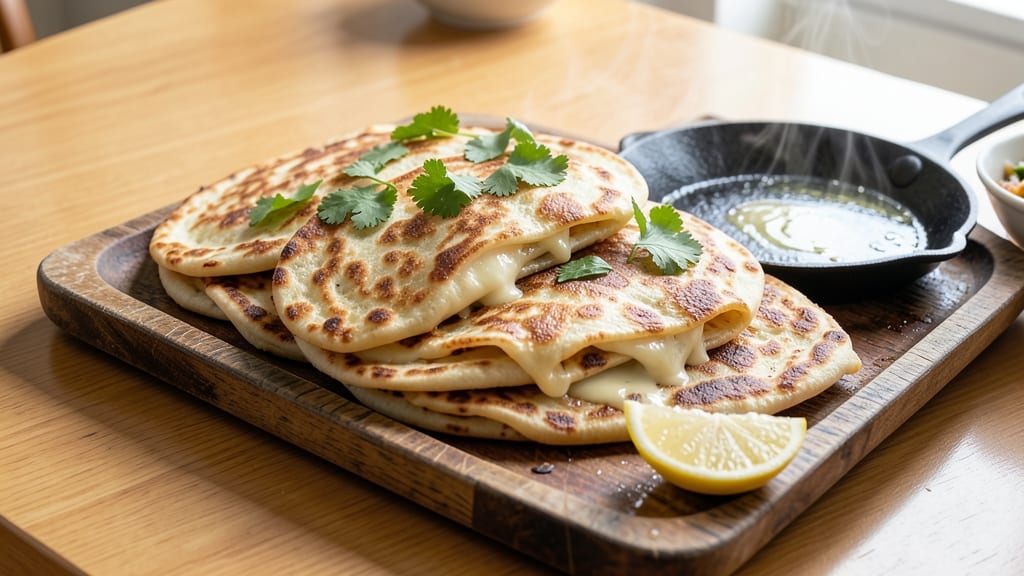
This Amul cheese paratha recipe delivers the perfect balance of crispy golden layers and irresistible gooey cheese stretch that makes every bite unforgettable. 🔥 The secret lies in a well-hydrated dough that stays soft inside while developing those coveted crispy edges, paired with Amul cheese that melts into stretchy perfection as it cooks.
What sets these parathas apart is the technique—rolling the dough thin enough for even cooking while keeping it thick enough to hold the generous cheese filling. The dough's subtle oil content ensures a tender bite, while the high-heat tawa cooking creates those signature blistered spots that signal success.
This dish is a staple in Indian homes, equally loved for its comforting flavors and satisfying texture. The result is a stack of parathas with crispy edges that shatter slightly, giving way to layers of flaky dough and melted cheese that pulls into silky strands.
The aroma alone—warm dough, melting cheese, and a hint of ghee—transforms any meal into something special. Whether served with mint chutney or yogurt, these parathas are a crowd-pleaser that delivers restaurant-quality results at home.
For extra flavor, try adding finely chopped green chilies or fresh herbs to the cheese filling before rolling. The variations are endless, but the foundation remains the same: tender dough, gooey cheese, and that perfect crispy texture. Let's get started on making these delicious parathas!
Ingredients for amul cheese paratha
Six simple ingredients transform into crispy, gooey parathas with perfect texture balance.
| Ingredient | Amount | Notes |
|---|---|---|
| All-Purpose Flour 🌾 | 3 cups | Medium protein for elasticity |
| Amul Butter 🧈 | ½ cup | Melted for dough hydration |
| Plain Yogurt 🥛 | ½ cup | Whisked smooth for tenderness |
| Water 💧 | ½ cup | Adjust for dough consistency |
| Salt 🧂 | ½ tsp | Fine grain preferred |
| Amul Cheese 🧀 | 1 ½ cups | Shredded, block preferred |
| Ghee 🫒 | 2 tbsp | For brushing parathas |
| Green Chilies 🌶️ | 2 whole | Finely chopped, optional |
| Fresh Cilantro 🌿 | ¼ cup | Chopped, optional garnish |
| Oil 🫒 | 2 tbsp | For dough rolling |
The Amul cheese is non-negotiable here—its meltability creates that signature stretch. Grab the block cheese from any Indian grocery store (Patel Brothers or Apna Bazaar have great selections) and shred it yourself for the best texture. The Amul butter adds richness and keeps the dough supple; don't substitute with regular butter. For the flour, Maida (refined flour) works best if available, but all-purpose flour gives a slightly rustic texture that many prefer. The yogurt should be plain and room temperature—no Greek or flavored varieties.
No Amul cheese? Mozzarella or provolone can work in a pinch, but expect less stretch. Running short on ghee? Butter works too, though it burns faster. The green chilies are optional but add a nice kick—Bird's Eye chilies from an Indian market pack the most heat. Fresh cilantro is ideal, but dried oregano at half the amount gets you close. For the dough, consistency is key: it should be soft but not sticky. If too dry, add water one teaspoon at a time. If too sticky, add a bit more flour. The oil for rolling should be light—vegetable or sunflower oil work perfectly.
Store the dough wrapped in plastic in the fridge for up to 2 days—it actually improves as it rests. The cheese filling can be prepped ahead and kept covered in the fridge for 1 day. Parathas reheat beautifully: wrap in foil and warm in a dry pan for 2-3 minutes on each side. For extra crispiness, brush with melted ghee before serving. These keep well in an airtight container for 3 days at room temperature or 1 month frozen between parchment paper.
Why You'll Love This Recipe
- Five-Ingredient Magic: I swear by this—just flour, yogurt, butter, water, and salt. That’s it. No fancy pantry raids, no last-minute grocery runs. The dough comes together in minutes, and the butter layers? Pure indulgence without the fuss.
- Butter Bomb Flavor: The moment that warm, flaky paratha hits your plate—melty Amul butter oozing out at every bite—you’ll understand. It’s not just cheese; it’s a rich, buttery hug in every fold. Honestly, the first time I made these, I ate one straight out of the pan.
- Breakfast to Brunch: Need a quick lunch? Pack them for work. Hosting Sunday brunch? They’re the star. Even my picky teenage nephew grabs seconds—no complaints, just empty plates. Works for any meal, any day.
- Budget Luxury: A whole batch costs less than takeout, and they reheat like a dream. Freeze extras for lazy mornings or impromptu guests. Between us, this is my go-to when I want to feel fancy without breaking the bank.
Step-by-step instructions for Amul cheese paratha
Master the art of flaky, golden layers with this foolproof method for cheesy perfection.
👨🍳 Step 1: Prepare the Dough with Perfect Texture
In a large mixing bowl, combine the 3 cups all-purpose flour and 0.5 tsp salt. Make a well in the center and add the 0.5 cup melted Amul butter, 0.5 cup plain yogurt, and 0.5 cup water. Mix with your fingers until the dough starts forming, then knead on a clean surface for 8-10 minutes until smooth and elastic.
The dough should be soft but not sticky—add a little more flour if needed, but don't overdo it or your parathas will be dense. Cover the dough with a damp cloth and let it rest for 30 minutes at room temperature. This resting period allows the gluten to relax, making rolling easier and creating those signature flaky layers.
🍳 Step 2: Roll and Layer the Cheese Filling
Divide the rested dough into 6 equal portions (about ½ cup each) and roll each piece into a 6-inch circle on a lightly floured surface. Keep the remaining dough covered to prevent drying. In the center of each rolled dough, place ¼ cup shredded Amul cheese, ½ tsp finely chopped green chilies, and 1 tsp chopped fresh cilantro.
Gently fold the edges of the dough over the filling, sealing it completely. Roll the sealed dough out again into a 6-inch circle, applying light pressure to create thin, even layers. The goal is to achieve a ¼-inch thickness—this ensures crispy edges while keeping the center tender. If the dough resists rolling, let it rest for 5 minutes before attempting again.
🔥 Step 3: Cook to Golden Perfection on Medium Heat
Heat a non-stick skillet over medium heat and add 1 tbsp oil. Place one paratha in the skillet and cook for 2-3 minutes on each side, pressing down gently with a clean cloth or spatula to help it puff up. You'll know it's ready when the surface turns a beautiful golden brown color with crispy spots.
Once one side is golden, flip carefully and cook the other side. For extra crispiness, brush the cooked side with 1 tsp ghee and cook for an additional 30 seconds until the ghee melts and the paratha develops a glossy sheen. Remove from the skillet and keep warm in a 200°F oven while you cook the remaining parathas.
🍽️ Step 4: Serve Warm with Gooey Cheese Pull
Transfer the cooked parathas to a serving platter and brush the tops with the remaining 1 tbsp ghee. The heat will cause the cheese inside to melt completely, creating that signature gooey stretch when you cut into them. Serve immediately while still warm—each bite should offer a perfect contrast of crispy, flaky layers with molten cheese in the center.
For best results, serve with mint chutney or a side of raita to balance the richness. The combination of crispy edges and gooey cheese makes these parathas irresistible, and the secret lies in the patient rolling and precise cooking technique. Enjoy your homemade Amul cheese parathas with that restaurant-quality crunch!
Pro Tips For Making Amul Cheese Paratha
- Salt the Yogurt First: Mix the salt directly into the yogurt before adding it to the flour—this way, the dough gets evenly seasoned without dry spots. I used to sprinkle salt later and always ended up with bland patches in the center.
- Roll Hot, Not Cold: Let the rolled paratha sit for 2 minutes after shaping before cooking—this prevents it from sticking to the pan and helps the butter melt faster. Cold dough makes a sad, flat paratha.
- Use Room-Temp Butter: Take the Amul butter out 30 minutes before rolling—soft but not melted. Cold butter creates pockets that burst, while melted butter makes the paratha greasy. Room temp is the Goldilocks zone.
- Press Hard, Twice: After rolling, press the paratha firmly with your palm before flipping—this seals the layers and keeps the cheese from leaking out. I learned this after watching my first batch fall apart mid-cook.
Pro cooking tips for this dish
Dough Mastery
For perfectly elastic dough, knead for exactly 8-10 minutes—this develops gluten without overworking. I find using my knuckles works best for consistent pressure. The dough should feel soft like Play-Doh but not sticky.
If it cracks when rolled, let it rest 5 more minutes—this prevents tearing during cheese stuffing. 💪
Cheese Placement
Spread the Amul cheese evenly in the center, but don't overpack it—¼ cup per paratha is perfect. I like to sprinkle ½ tsp chopped green chilies directly on the cheese for extra flavor.
When folding, press the edges firmly to seal—this prevents cheese from leaking during cooking. A small gap is okay, but leave it too big and you'll get uneven cooking.
Rolling Technique
Roll from the center outward using even pressure—this creates uniform thickness. I use a rolling pin with a marble base (like the OXO Good Grips model) for better control. For the final roll, aim for ¼-inch thickness—any thinner and the edges burn before the center cooks.
If the dough resists, let it rest 5 minutes covered with a damp towel.
Cooking Heat
Medium heat is critical—too hot and the outside burns before the cheese melts. I test by sprinkling a few drops of water on the pan: if it sizzles but doesn't pop, the heat is perfect.
For that signature puff, press gently with a clean cloth while cooking. The moment you see golden brown spots, flip carefully—this is when the Maillard reaction creates those crispy layers. 🔥
Ghee Finishing
Brush with ghee (not oil) in the final 30 seconds—this adds richness and helps the cheese melt completely. I use a pastry brush to distribute it evenly. The ghee should sizzle slightly but not smoke.
For extra restaurant-style shine, brush again right before serving. This step makes all the difference in that gooey cheese pull you crave.
Resting Between
Keep cooked parathas in a 200°F oven while finishing the batch—they stay warm and crispy. I line the oven rack with parchment paper to prevent sticking. If reheating later, warm in a dry pan for 1 minute per side—never microwave, or the cheese gets rubbery.
The secret to restaurant-quality parathas is this resting technique between batches. ✨
Nutrition facts
Frequently asked questions
Why does my Amul cheese paratha dough crack when rolling?
The dough cracks when it's either too dry or hasn't rested enough. Always knead for 8-10 minutes and let it rest 30 minutes before rolling. If cracks appear, cover with a damp cloth and rest 5 more minutes—this relaxes the gluten and prevents tearing during stuffing. Keep your work surface lightly floured but avoid over-flouring, which makes the dough too dry.
Can I make Amul cheese parathas ahead of time?
Yes! The dough can be stored wrapped in plastic in the fridge for 2 days—it actually improves with rest. For the filling, pre-shred the cheese and chop herbs/chilies, then store in an airtight container for 1 day. Cooked parathas reheat beautifully: wrap in foil and warm in a dry pan for 1-2 minutes per side until crispy again. Never microwave—the cheese turns rubbery!
What's the secret to getting that perfect crispy edge?
The crispy edge comes from three things: medium heat, even thickness (¼-inch), and ghee finishing. Cook on medium heat (test with water droplets—should sizzle but not pop), and brush with ghee in the final 30 seconds of cooking. For extra crunch, press gently with a clean cloth while cooking to encourage puffing. The Maillard reaction at this stage creates those golden, shatterable edges.
Can I substitute Amul cheese with another type?
Amul cheese is ideal because of its meltability and stretch, but you can use mozzarella or provolone in a pinch. For best results, shred the cheese yourself—pre-shredded varieties contain anti-caking agents that prevent proper melting. If using mozzarella, add 1 tsp cornstarch per cup to improve texture. Avoid cheddar or paneer—they don't melt the same way.
How do I fix undercooked centers or burnt edges?
Undercooked centers happen when the heat is too low or the paratha is too thick. Increase heat to medium-high and reduce thickness to ¼-inch. Burnt edges mean your heat is too high—lower it and cook more slowly. For uneven cooking, roll the dough slightly thicker in the center and thinner at the edges. If already burnt, cut off the edges and serve the rest—the filling will still be delicious!