
Desserts
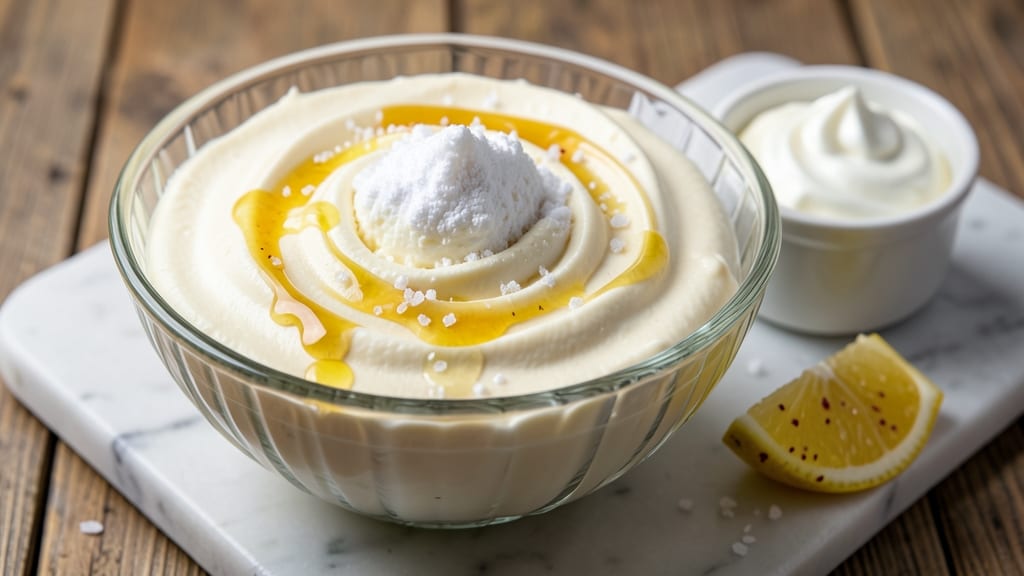
This amazing cream cheese frosting recipe transforms simple ingredients into a velvety, tangy-sweet spread that elevates every cake or cupcake. 💛 The secret lies in room-temperature cream cheese and patient whipping—no lumps, just silky perfection.
I’ve perfected this over years of baking disasters (and triumphs), and it’s become my go-to for everything from classic vanilla layers to bold matcha twists.
What makes this frosting truly special is its foolproof stability—no graininess, no sliding off cakes. The trick? Beat the cream cheese until completely smooth before adding butter, then sweeten gradually to avoid curdling.
A splash of vanilla or citrus zest takes it from basic to extraordinary, while modern twists like fruit purées or cocoa powder keep it exciting.
Imagine piping this onto a rich chocolate cake, swirling it over lemon bars, or dolloping it on top of cheesecake slices. The result is a frosting that’s creamy yet sturdy, sweet with just the right tang, and versatile enough to match any dessert.
No special tools needed—just a mixer and patience (well, maybe a little patience).
Ready to make it? We’ll cover the exact ratios, whipping techniques, and flavor combos that guarantee success. Trust me, once you try this, store-bought frosting won’t stand a chance.
Ingredients for amazing cream cheese frosting
Eight ingredients transform into the creamiest, most stable frosting you'll ever pipe.
| Ingredient | Amount | Notes |
|---|---|---|
| Room-Temperature Cream Cheese 🧀 | 8 oz | Full-fat, 8 oz block preferred |
| Unsalted Butter 🧈 | 4 oz | Room temperature, cut into cubes |
| Powdered Sugar 🍚 | 3 cups | Sifted for smooth texture |
| Pure Vanilla Extract 🍯 | 1 tbsp | High-quality, Madagascar preferred |
| Heavy Whipping Cream 🥛 | ½ cup | Cold, for stability |
| Lemon Juice 🍋 | 1 tsp | Freshly squeezed for tang |
| Diamond Crystal Kosher Salt 🧂 | ¼ tsp | Fine grain for balance |
| Cream of Tartar 🧂 | ¼ tsp | Stabilizes whipped texture |
The cream cheese is non-negotiable—Philadelphia brand or a high-quality store option like Wisconsin Craft makes all the difference. Grab the 8 oz block (not tub) for best texture, and let it sit at room temperature for at least 2 hours before using. The butter? European-style if you can find it—higher fat content means richer flavor. Powdered sugar should be sifted to avoid lumps; I keep a sifter in my pantry just for this. Vanilla extract? Madagascar bourbon is my go-to—it adds depth without overpowering.
No powdered sugar? Confectioners' sugar works in a pinch, but sift it well. Short on cream cheese? Substitute with mascarpone cheese (use same amount), though the texture will be slightly softer. The heavy whipping cream adds stability—don't skip it, even if you're not piping. For extra tang, orange zest or lime juice works beautifully instead of lemon. If you're making this ahead, add the cream of tartar last to preserve freshness. Pro tip: Beat the cream cheese until completely smooth before adding anything else—this eliminates lumps completely.
This frosting keeps beautifully—3 days refrigerated in an airtight container with plastic wrap pressed directly on the surface. For longer storage, freeze for up to 3 months (thaw at room temperature before using). I like to portion it into small jars for easy grab-and-go decorating. If it thickens in the fridge, whisk in 1 tsp warm water to restore creaminess. The secret to perfect piping? Chill the frosting 15 minutes before using—it'll hold its shape beautifully.
Why You'll Love This Recipe
- No Stand Mixer Needed: I’ll be real—this frosting comes together with just a hand mixer or even a whisk. The cream cheese and butter soften into something silky smooth with minimal effort, and the powdered sugar dissolves faster than you’d expect.
- Rich Without Overpowering: That first tang of room-temperature cream cheese, then the buttery warmth—it’s like a hug in frosting form. The vanilla extract ties it all together, but the heavy whipping cream keeps it light enough to spread without feeling heavy.
- Birthday Cake or Coffee Cake: Slather it on a layer cake for a classic touch, or drizzle it over a cinnamon coffee cake for something cozy. Honestly, I’ve used it on muffins, too, and it’s always the star.
- Makes More Than You Think: A batch stretches further than you’d guess—enough for two cakes or a dozen cupcakes. And if there’s leftovers? They keep in the fridge for days, ready to jazz up toast or pancakes when you’re in a rush.
Step-by-step instructions for silky smooth cream cheese frosting
Here's how to create the most luxurious, pipeable frosting that's foolproof every time.
👨🍳 Step 1: Beat Cream Cheese Until Ultra-Smooth
In a stand mixer fitted with the paddle attachment, beat the 8 oz room-temperature cream cheese on medium speed for 2-3 minutes. You're looking for a completely smooth, lump-free texture—this is your foundation. Real talk: if you see any lumps, your cream cheese wasn't fully softened. Let it sit at room temperature for another 10 minutes if needed.
Here's the thing—room temperature matters more than you think. Cold cream cheese won't emulsify properly, leading to grainy frosting. I press my finger into the block before starting—if it leaves a slight dent, it's ready. The mixture should become pale and fluffy, nearly doubling in volume as air incorporates.
🍳 Step 2: Incorporate Butter and Sweeten Gradually
Add the 4 oz cubed unsalted butter and beat on medium speed for 2-3 minutes until fully combined and light in color. This step ensures perfect texture—don't rush it. Then, with the mixer running on low speed, gradually add the 3 cups sifted powdered sugar through a fine-mesh sieve, about ½ cup at a time. This prevents sugar shock that can cause separation.
After each addition, increase speed to medium and beat for 30 seconds to fully incorporate. You'll notice the mixture thicken slightly—this is normal. If it looks too stiff, we'll fix it in the next step. The key here is patience; adding sugar too quickly creates a grainy texture that's impossible to fix later.
🥘 Step 3: Whip in Stabilizers and Flavorings
Add the 0.5 cup cold heavy whipping cream, 1 tbsp pure vanilla extract, 1 tsp lemon juice, 0.25 tsp diamond crystal kosher salt, and 0.25 tsp cream of tartar. Beat on high speed for 3-4 minutes until light, fluffy, and triples in volume. You'll see ribbons form when you lift the paddle—this is your perfect consistency signal.
This is the moment that matters: the cream of tartar and salt work together to stabilize the frosting, while the lemon juice brightens the flavor. Don't skip the high-speed beating—this incorporates air and creates that signature silky smoothness. If it looks too thick, we'll adjust in the final step. If it's too thin, we'll fix it then too.
⏰ Step 4: Adjust Consistency for Perfect Piping
Check your frosting's consistency by piping a small amount onto parchment paper. If it's too thick to pipe smoothly, add 1-2 tablespoons heavy whipping cream at a time, beating well after each addition. If it's too thin (unlikely with these ingredients), add 1 tablespoon powdered sugar and mix until smooth. You want a frosting that holds its shape when piped but still spreads beautifully.
I know it seems weird, but trust me—this adjustment makes all the difference. The frosting should hold peaks when piped but still be spreadable. For cakes, aim for a slightly stiffer consistency; for cupcakes, go slightly softer. Transfer to a piping bag fitted with your desired tip and use immediately, or refrigerate for up to 3 days for best texture.
Pro Tips For Making Amazing Cream Cheese Frosting
- SOFTEN THE CREAM CHEESE RIGHT: Cream cheese straight from the fridge is your enemy here. Cut the block into cubes and let them sit on the counter for 45-60 minutes—yes, even if you’re in a hurry. Cold cream cheese fights your mixer, and you’ll end up with lumps no amount of beating can fix. Trust me, the extra time saves you from frustration later.
- USE A STAND MIXER—NOT YOUR ARM: I’ve tried hand-mixing this frosting, and let’s just say my biceps still remember the betrayal. A stand mixer with the paddle attachment handles the heavy cream cheese and butter better, especially when you’re scaling up for cakes or cupcakes. If you’re using a hand mixer, work in 30-second bursts or you’ll overheat the butter and turn your frosting into a greasy mess.
- SIFT THE POWDERED SUGAR FIRST: Skip the scoop-and-dump method—powdered sugar clumps like gossip at a family reunion. Sift it directly into the mixer bowl before adding the cream cheese and butter. This keeps your frosting light and fluffy instead of grainy, and it mixes in evenly without clogging your beaters. (Pro move: Sift it twice if you’re using a cheap mixer.)
- FOLD IN THE WHIPPING CREAM LAST: Adding heavy whipping cream too early makes the frosting split like a bad friendship. Whip it separately to soft peaks first, then gently fold it in at the very end with a spatula. This keeps the texture airy and prevents the cream cheese from breaking down. If your frosting looks curdled, you’ve already lost—start over.
Troubleshooting this dish
Grainy Texture Fix
If your frosting looks grainy after mixing, it’s almost always from cold cream cheese or sugar shock. First, beat the mixture on high speed for an extra 2-3 minutes—this often smooths it out. If lumps persist, add 1 tbsp warm water and mix until fully incorporated.
For future batches, ensure your cream cheese is fully softened (press your finger into it—it should leave a slight dent). Never skip the gradual sugar addition through a sieve! 💫
Frosting Too Thin
Thin frosting usually means overmixed butter or too much liquid. Stop mixing immediately and add 1 tbsp powdered sugar at a time, beating well after each addition. If it’s still too runny, chill the bowl in the fridge for 10 minutes before reassessing.
Pro tip: Use a chilled mixing bowl from the start—this helps stabilize the texture. For piping, a slightly thicker consistency is easier to work with anyway.
Separation Issues
Separation (oil pooling on top) happens when ingredients aren’t fully incorporated or the mixer speed was too high too soon. Beat the separated mixture on low speed for 1 minute, then gradually increase to medium-high while adding 1 tbsp cold butter.
If oil persists, add 1 tsp lemon juice to help re-emulsify. To prevent this, always beat the cream cheese until completely smooth before adding butter or sugar.
Frosting Doesn’t Hold Shape
If your frosting collapses when piped, it’s likely too warm or lacks stabilizers. Chill the bowl in the fridge for 15-20 minutes before piping. For extra stability, add ½ tsp more cream of tartar and beat for another 1 minute.
If using for cupcakes, a slightly softer consistency is fine—just pipe quickly and decorate immediately. For cakes, aim for a stiffer frosting that holds peaks.
Weird Sour Taste
An overly tangy flavor usually means too much lemon juice or cream of tartar. Taste as you go—start with just ½ tsp lemon juice and adjust. If it’s still sour, add 1 tsp vanilla extract to balance.
For a sweeter frosting, reduce the lemon to ½ tsp and increase vanilla to 1.5 tbsp. The key is balance—cream cheese is naturally tangy, so let the other flavors complement it.
Frosting Curdles
Curdling happens when ingredients aren’t at room temperature or mixed too quickly. If this occurs, beat in 1 tbsp cold butter and 1 tbsp powdered sugar on low speed** until smooth. To prevent curdling, ensure all ingredients (especially cream cheese and butter) are fully softened.
Add sugar gradually and avoid high speeds until everything is fully combined. Patience is key—rushing leads to curdles! 🔥
Nutrition facts
Frequently asked questions
Can I make this frosting without a stand mixer?
Use a hand mixer with a whisk attachment. Work in batches if needed, and beat the cream cheese on high speed for 3-4 minutes until completely smooth. For the butter and sugar, add gradually while mixing on medium-high—just be patient and scrape the bowl often to avoid lumps.
How do I store leftover frosting?
Transfer to an airtight container with plastic wrap pressed directly on the surface to prevent drying. It keeps in the fridge for 3 days or freezes for 3 months. Thaw overnight in the fridge before using. For best texture, chill for 15 minutes before piping after refrigeration.
What are the best flavor variations?
Try matcha (replace vanilla with 1 tbsp matcha powder), citrus (add 1 tbsp orange zest), or chocolate (fold in ½ cup melted dark chocolate). For fruit flavors, blend ½ cup berries into the finished frosting. Always taste as you go—cream cheese frosting is naturally tangy, so balance is key!
Why did my frosting turn grainy?
Graininess usually means cold cream cheese or sugar shock. Fix it by beating on high speed for 2-3 extra minutes—this often smooths it out. For future batches, ensure cream cheese is fully softened (press your finger—it should leave a slight dent) and add sugar gradually through a sieve. Never rush the mixing!
Can I use this frosting for cheesecakes?
Yes, but adjust the consistency slightly. For cheesecake toppings, pipe a softer spread (add 1 tbsp more heavy cream) and swirl it gently with a knife. For filling, whip the frosting until ultra-light and layer between cheesecake layers. Chill for 2 hours before serving to set properly.